Skip to content
  • Who We Are
    • About Us
      • Nobel Prize
      • ISB Today
      • What is Systems Biology?
      • Our History
      • Contact ISB
    • People
      • Leadership
      • Board of Directors
      • Director Emeritus
      • Faculty
      • Education Directors
      • Principal Scientists
      • Senior Research Scientists
      • Affiliate Faculty
      • Scientific Advisory Board
    • Labs
      • All Labs
    • Careers
      • Work At ISB
      • Faculty Development
      • Postdoctoral Fellowships
      • Grad Student Opportunities
      • Internships
  • What We Do
    • Research Areas
      • All Research Areas
      • Cancer
      • Health
      • Infectious Disease
      • Chronic Illness
      • Environment
    • Education and Training
      • Education Initiatives
      • Educator Resources
      • Student Programs
      • Courses and Symposia
    • Published Research
      • Publications
    • Open Source Software
      • Software and Downloads
    • Services
      • Olink® Services
      • Proteomics Services
  • News and Events
    • News
      • ISB News
    • Newsletter
      • Subscribe
    • Events
      • Upcoming Events
      • Events Archive
    • Media
      • Media Coverage
      • Press Releases
      • Media Inquiries
    • Social Media
      • LinkedIn
      • Bluesky
      • X
      • Instagram
      • Facebook
      • YouTube
  • Ways To Give
    • Ways To Give
      • How You Can Help
    • Giving Priority Areas
      • My Digital Gut
      • STEM Education
      • HPV+ Cancer
      • Postdoctoral Fellowship Fund
    • Team
      • Meet Us
    • Donate Now
      • Donate →
Donate
clear

Featured News

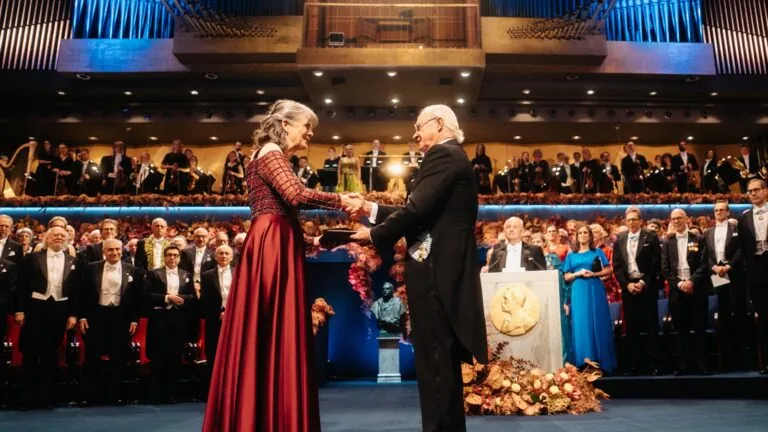
A photograph depicting a woman in a sparkling ballgown shaking hands with a man in a tuxedo on a stage with standing dignitaries behind them.

Posted: December 16, 2025

People Press Release Hood Lab
ISB’s Dr. Mary Brunkow Wins 2025 Nobel Prize in Physiology or Medicine

ISB’s Dr. Mary Brunkow Wins 2025 Nobel Prize in Physiology or Medicine

The prize recognizes foundational discoveries about regulatory T cells and the FOXP3 gene that redefined immune tolerance and opened avenues to treat autoimmune disease, enable transplantation, and advance immuno-oncology. ISB celebrates Dr. Brunkow’s leadership and collaborative science.

ISB’s Dr. Mary Brunkow Wins 2025 Nobel Prize in Physiology or Medicine
Illustration of Drs. Mary Brunkow, Fred Ramsdell, and Shimon Sakaguchi, recipients of the 2025 Nobel Prize in Physiology or Medicine.

Posted: October 23, 2025

Cancer People Press Release
The Science Behind the Nobel Prize

The Science Behind the Nobel Prize

The pioneering work of Mary Brunkow and Fred Ramsdell began with a mysterious mutant mouse known as “scurfy,” leading them to identify the FOXP3 gene and unlock how regulatory T cells prevent autoimmune disease — discoveries that now point to new treatments in cancer and autoimmunity.

The Science Behind the Nobel Prize

More News (Environment)


Posted: February 13, 2026

Environment Press Release Baliga Lab
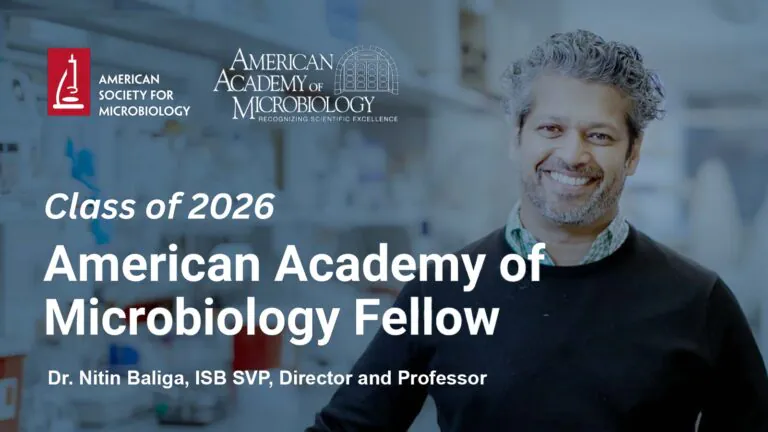
Nitin Baliga Among 63 Fellows Elected to the American Academy of Microbiology

Nitin Baliga Among 63 Fellows Elected to the American Academy of Microbiology

ISB Professor Dr. Nitin Baliga has been elected to the American Academy of Microbiology as part of the 2026 Fellowship Class — a highly selective honor recognizing exceptional scientific achievement and leadership in the microbial sciences. Baliga joins 62 peers from 14 countries selected through a rigorous peer-review process.

Nitin Baliga Among 63 Fellows Elected to the American Academy of Microbiology
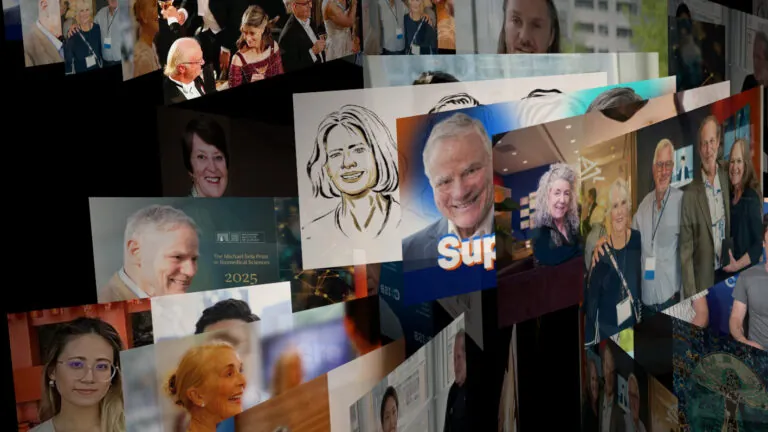
A photo collage of snapshots of important events from ISB's 2025 calendar.

Posted: December 19, 2025

Cancer Chronic Illness Education
2025 Year in Review: Breakthroughs, Milestones & Moments That Defined ISB

2025 Year in Review: Breakthroughs, Milestones & Moments That Defined ISB

From Nobel recognition and scientific firsts to transformative collaborations and community impact, 2025 marked one of the most significant years in ISB’s 25-year history.

2025 Year in Review: Breakthroughs, Milestones & Moments That Defined ISB
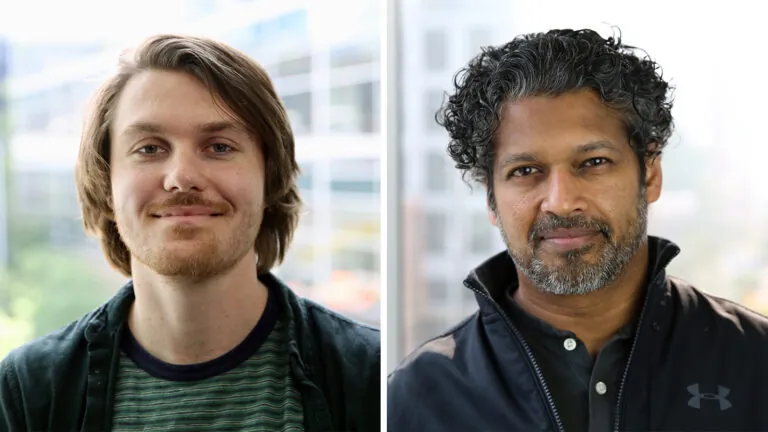
Alex Carr and Nitin Baliga

Posted: June 18, 2025

Environment Press Release Baliga Lab
Microbes That Keep Ecosystems in Balance Can Fall Apart Easily, New Study Finds

Microbes That Keep Ecosystems in Balance Can Fall Apart Easily, New Study Finds

Just-published research out of ISB shows the microbial teamwork behind denitrification can collapse in polluted environments, threatening ecosystem balance and resilience.

Microbes That Keep Ecosystems in Balance Can Fall Apart Easily, New Study Finds
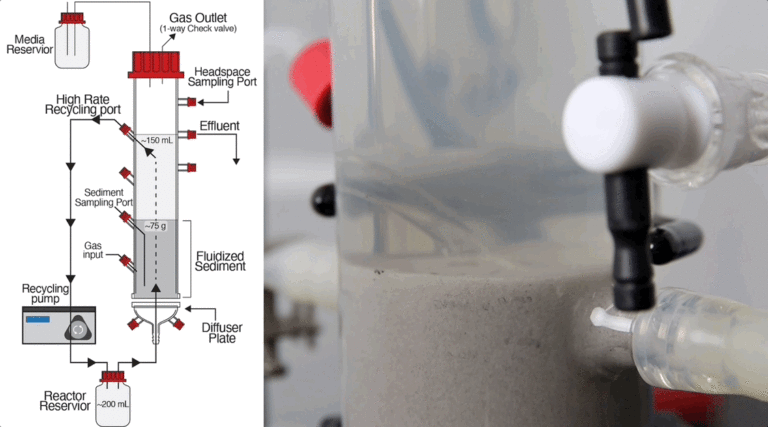
Fluidized bed reactor

Posted: September 4, 2024

Environment Baliga Lab Climate Change
How Microbes Evolve to Spatially Divide and Conquer an Environment 

How Microbes Evolve to Spatially Divide and Conquer an Environment 

ISB researchers examined representative organisms of two classes of microbes whose interaction contributes to the conversion of more than 1 gigaton of carbon into methane every year. They found that gene mutations selected over a relatively short timeframe in the two microbes led to distinct functions.

How Microbes Evolve to Spatially Divide and Conquer an Environment 
screenshot of video for High School Duo Named Champions in DOE-Sponsored AlgaePrize Competition

Posted: August 10, 2023

Environment Events Baliga Lab
High School Duo Named Champions in DOE-Sponsored AlgaePrize Competition

High School Duo Named Champions in DOE-Sponsored AlgaePrize Competition

High school students Ashwin Mukherjee and Rohan Chanani worked with ISB Research Scientist Dr. Jacob Valenzuela on a project to build a machine learning algorithm to count algal cells from microscope images taken from a cell phone. In April, the team was recognized as champions in the DOE-sponsored AlgaePrize competition.

High School Duo Named Champions in DOE-Sponsored AlgaePrize Competition
Cultivated meat illustration

Posted: December 15, 2021

Environment Thorsson-Shmulevich Lab Sustainability and Remediation
How Systems Biology Is Helping Advance the Cultivated Meat Industry

How Systems Biology Is Helping Advance the Cultivated Meat Industry

The quest to create cultivated meat has been a true multidisciplinary puzzle. It’s biology, engineering, physics, bioinformatics, mathematics, computer science, and more. Enter systems biology. ISB and other organizations are toiling to better understand how to create lab-grown meat in a safe, effective manner that can eventually scale up to compete with traditional meat.

How Systems Biology Is Helping Advance the Cultivated Meat Industry
View All News

  • Who We Are
    • Work At ISB
    • People
  • What We Do
    • Research
    • Publications
  • News and Events
    • Media Inquiries
    • News
  • Services
    • Olink Services
    • Proteomics Services
  • Other
    • Sponsored Projects Resources
    • COI
ISB logo (1-color)
Donate Contact Us

Subscribe to Molecular Me, where we share news of our transformational research, devoted scientists and educators, upcoming events, and more.

© 2026 Institute for Systems Biology (ISB). All Rights Reserved
  • Login
  • Intranet
  • Purchase Terms
  • Terms of Service
  • Privacy Policy
Web Design by T-F