2025 Year in Review: Breakthroughs, Milestones & Moments That Defined ISB
From Nobel recognition and scientific firsts to transformative collaborations and community impact, 2025 marked one of the most significant years in ISB’s 25-year history.
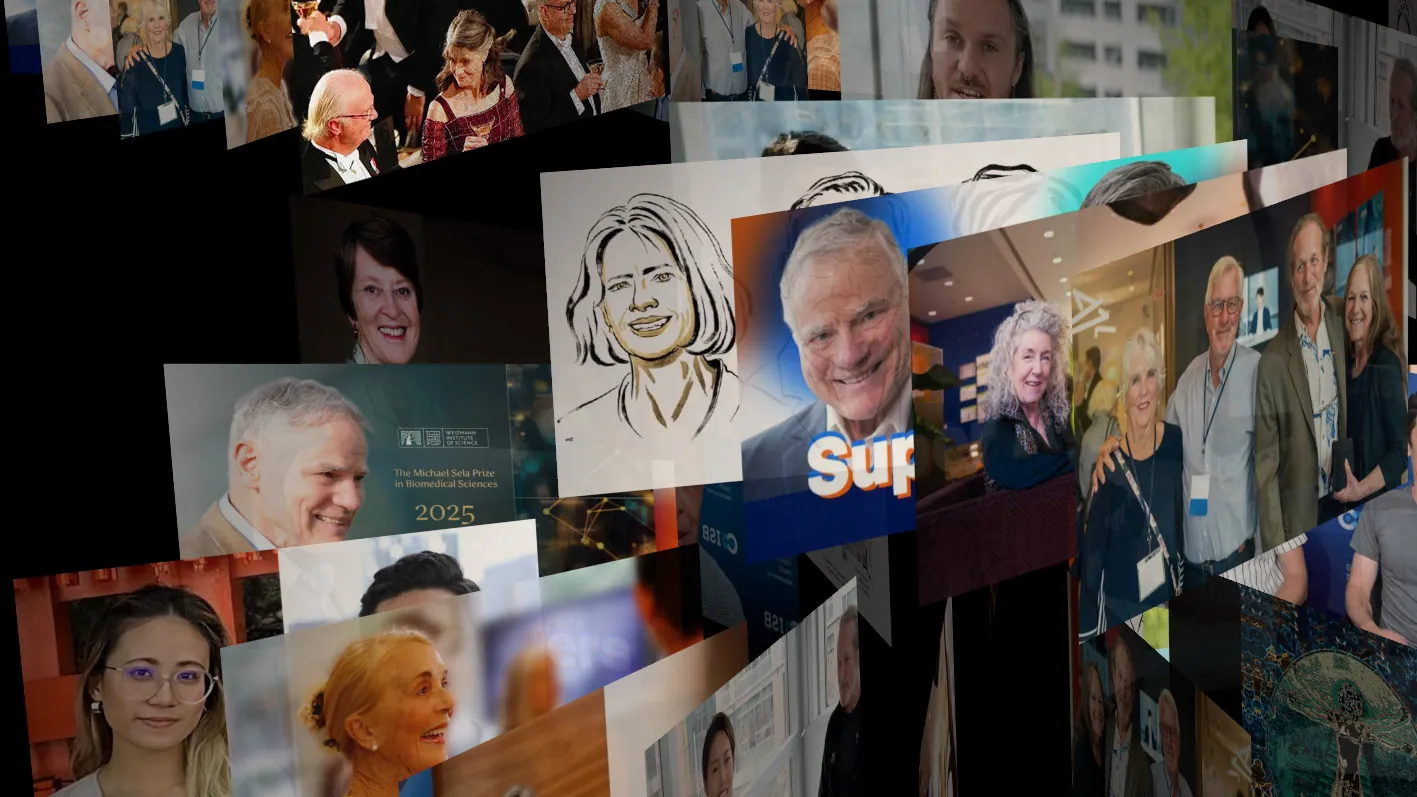
In 2025, the Institute for Systems Biology marked a pivotal year — one that coincided with our 25th anniversary and underscored our enduring role in shaping the future of biomedical science. The year brought global recognition to ISB faculty, expanded our leadership in systems-level approaches to health and disease, and highlighted the power of interdisciplinary science to address some of today’s most complex biological challenges.
A defining moment came with the awarding of the Nobel Prize in Physiology or Medicine to ISB’s Dr. Mary Brunkow, honoring foundational discoveries in immune tolerance made earlier in her career that continue to influence modern medicine. Alongside this historic recognition, ISB researchers advanced new insights across cancer biology, immunology, microbiome science, artificial intelligence, and translational informatics — extending a 25-year legacy of innovation rooted in systems thinking.
Beyond scientific achievement, 2025 reflected ISB’s commitment to convening global conversations, building community, and investing in the next generation of scientific leaders. Through public events, open research platforms, education initiatives, and partnerships around the world, ISB celebrated both progress and purpose — honoring those who have shaped our past while laying the groundwork for discoveries yet to come.
Nobel Prize
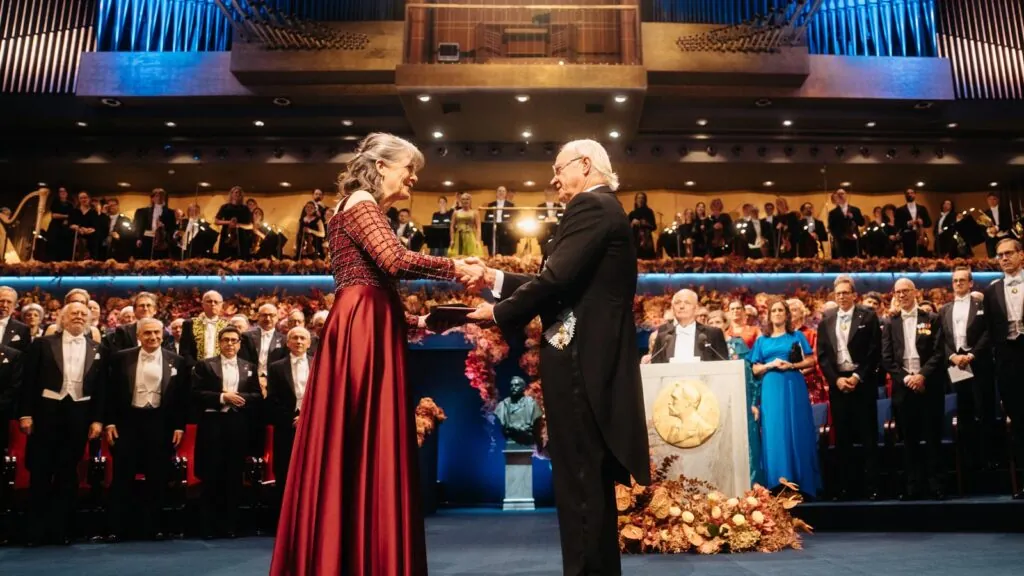
Mary E. Brunkow Awarded the 2025 Nobel Prize in Physiology or Medicine
In one of the most historic moments for ISB, Dr. Mary Brunkow was awarded the Nobel Prize in Physiology or Medicine for her groundbreaking discoveries in immune tolerance and the central role of regulatory T cells (Tregs). Her pioneering work — including identifying the FOXP3 gene as the master regulator of Tregs — reshaped modern immunology and opened new pathways for treating autoimmune disease, transplantation, cancer, and beyond. The Nobel Assembly honored Brunkow, Fred Ramsdell, and Shimon Sakaguchi for discoveries that continue to influence global health and biomedical research. Read More →
Scientific Breakthroughs
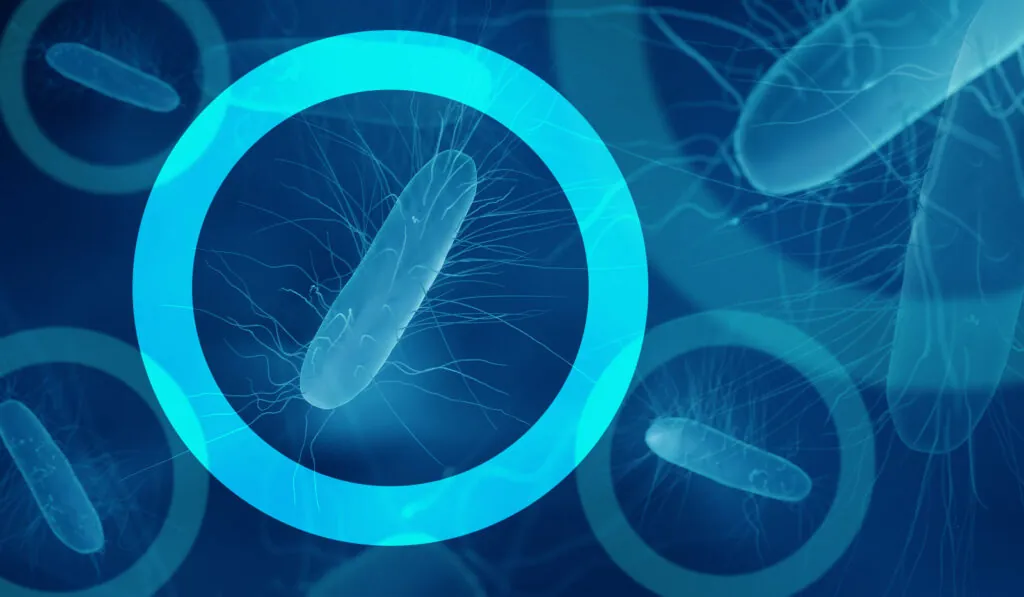
Disarming a Hidden Killer: Predicting — and Preventing — C. diff Before It Strikes
Researchers at ISB have developed a personalized modeling framework that can predict whether C. diff is likely to colonize an individual’s gut — a critical step in preventing severe, sometimes life-threatening infections. The study, published in Cell Systems, also shows how specific probiotic therapies might block or reverse colonization. The work offers a powerful new path toward anticipating infection before symptoms ever appear. Read More →
Hidden Rules of Immune Response
ISB researchers uncovered key “rule sets” that govern how T cells recognize and respond to pathogens. Using APMAT — a computational–experimental framework — the team could predict which T cells would expand, persist, or fade during infection. The findings open new avenues for improving vaccines and immunotherapies. Read More →
Melanoma’s Rapid Treatment Evasion
A joint ISB–MIT study revealed that melanoma cells begin adapting to targeted therapy within hours — long before genetic resistance kicks in. The research identifies an early, reversible state that enables cancer cells to survive BRAF inhibitors and proposes a combination strategy to block it. The findings point toward more durable treatments for melanoma. Read More →
MEDI: Detecting Diet From Stool DNA
ISB scientists introduced MEDI, a novel method that uses stool metagenomic data to reconstruct a person’s diet from food-derived DNA. This objective, data-driven approach could complement or replace traditional food diaries, which often rely on self-report and suffer from recall bias. MEDI opens new opportunities for nutritional research and microbiome–diet studies. Read More →
A New Way to Measure Gut Bacterial Biomass
ISB researchers developed a simple, cost-effective method to estimate absolute bacterial biomass in stool samples using the ratio of bacterial-to-host DNA reads. Published in mSystems, the technique allows scientists to calculate biomass directly from standard metagenomic data — no specialized equipment or complex workflows required. This approach could accelerate microbiome research across fields. Read More →
Biomedical Data Translator Release
The Biomedical Data Translator Consortium released a powerful, open-source knowledge graph platform that integrates diverse biomedical datasets into a unified system. The tool enables researchers and clinicians to explore connections across genomics, pharmacology, clinical data, and more — without specialized computational expertise. Published in Clinical and Translational Science, the release marks a major advance in translational informatics. Read More →
Rethinking the Genetic Paradigm of Cancer
In a provocative PLOS Biology essay, ISB Professor Sui Huang argues that cancer cannot be understood solely through genetics — and that cellular “states” and network dynamics play a critical role in tumor behavior. The piece challenges long-standing assumptions and calls for a more holistic, systems-level approach to cancer biology. It adds fresh perspective to ongoing debates about precision oncology. Read More →
Microbial Partnerships and Ecosystem Vulnerability
ISB researchers discovered that denitrifying microbial communities — central to global nitrogen cycling — become surprisingly fragile in contaminated environments. When nitrate levels exceed certain thresholds, cooperative processes break down and produce harmful byproducts like nitrous oxide. The findings illuminate how human activity can destabilize key microbial ecosystems. Read More →
mmSYGNAL: Transforming Myeloma Risk Prediction
A team led by ISB researchers unveiled mmSYGNAL, a machine-learning model that predicts risk in multiple myeloma by analyzing the gene-regulatory networks driving each patient’s disease. Published in the British Journal of Cancer, the tool provides deeper insights than traditional mutation-based classifications. It may help clinicians tailor therapies more precisely. Read More →
Awards and Honors
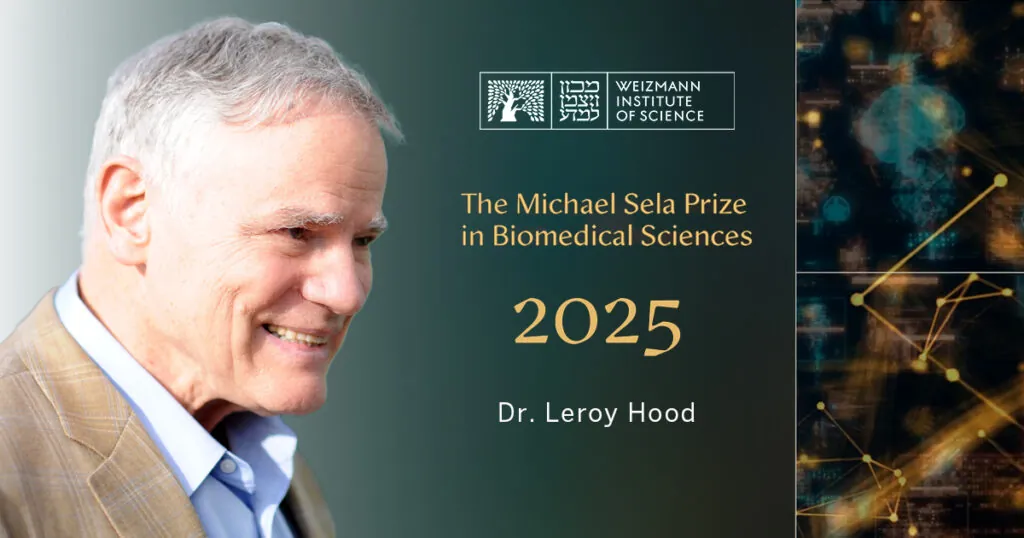
Dr. Lee Hood Receives Inaugural Michael Sela Prize from Weizmann Institute of Science
ISB Co-founder and Professor Dr. Lee Hood was named an inaugural recipient of the Michael Sela Prize in Biomedical Sciences from the Weizmann Institute of Science, recognizing transformative contributions to modern biomedicine. Hood shares the international honor with Francis S. Collins and Eric S. Lander for pioneering work that reshaped genomic science and human health. Read More →
ISB Named Winner of 2025 Amazon Web Services Imagine Grant for Nonprofits
ISB has won a 2025 AWS Imagine Grant to advance Tarpon, a generative AI platform that generates digital fingerprints of T cell receptors. By linking immune signatures to genomic and clinical data, Tarpon enables rapid discovery and the design of targeted therapies. Read More →
Events & Public Engagement
Eric Topol and Lee Hood: Two Luminaries on Longevity and Prevention
Renowned physician-scientist Dr. Eric Topol joined ISB Co-founder Dr. Lee Hood for a virtual discussion on the science of longevity, prevention, and healthspan, inspired by Topol’s book Super Agers. The conversation explored how genomics, AI, and lifestyle science are converging to extend years lived in good health, not just lifespan. Read More →
From Genesis to Reality: Decoding the AI Revolution
Former Microsoft Chief Research and Strategy Officer Craig Mundie joined ISB President Dr. Jim Heath for a public conversation at Town Hall Seattle exploring the rapidly evolving landscape of artificial intelligence and its societal implications. Co-presented by ISB and Town Hall, the event drew on Mundie’s new book, Genesis: Artificial Intelligence, Hope, and the Human Spirit, co-authored with Eric Schmidt and the late Henry Kissinger. Read More →
Microbial Metabolites and Human Health: 2025 Virtual Microbiome Symposium
ISB convened leading researchers from across the U.S. and abroad for its 2025 Virtual Microbiome Symposium, focused on how microbial metabolites shape immune, neural, and systemic health. The free, global event drew more than 1,000 registrants from over 70 countries and featured talks and panel discussions exploring emerging mechanisms, translational challenges, and the future of microbiome-informed medicine. Read More →
What We’re Learning About Long COVID
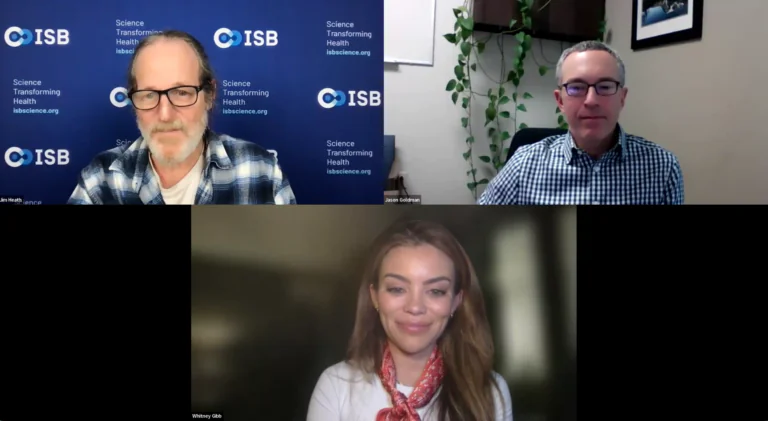
At a November 2025 virtual town hall, leaders from the Pacific Northwest RECOVER hub shared emerging insights from the RECOVER 1.0 study and discussed where the science is headed next. ISB President Dr. Jim Heath joined Dr. Helen Chu and Dr. Jason Goldman to highlight early findings and preview upcoming clinical trials aimed at translating biology into improved care. Read More →
RECOVER 2.0: New Insights and Next Steps in Long COVID Research
In July 2025, ISB convened its second virtual RECOVER town hall of 2025 to outline the next phase of the study, known as RECOVER 2.0. Led by Dr. Jason Goldman, the session detailed plans to follow more than 5,000 participants nationwide to better define long-term disease trajectories and explore links to neurocognitive, cardiopulmonary, and autoimmune conditions. Read More →
RECOVER Study on Long COVID: Virtual Town Hall
ISB hosted a virtual town hall in January 2025 to share updates from the NIH-funded RECOVER study, a national effort to understand and address Long COVID. ISB President Dr. Jim Heath, who leads the Pacific Northwest RECOVER hub, was joined by clinical leaders Dr. Helen Chu (UW Medicine), Dr. Jason Goldman (Swedish/Providence), and study coordinators to discuss progress, participation, and next steps. Read More →
How Generative AI Is Helping Decode the Human Immune System
In an ISB Research Roundtable, Dr. Jim Heath introduced Tarpon, a generative AI model developed with researcher Daniel Chen to uncover fundamental principles governing human immune development. Trained on more than one million T cell receptor sequences, the model offers new insights into immune function across aging, cancer, and infectious disease. Read More →
Beyond the Genetic Code: A New Way to Understand and Treat Cancer
ISB Professor Dr. Sui Huang presented a Research Roundtable challenging the traditional genetic paradigm of cancer. Drawing on systems biology, Huang proposed that cancer can arise from shifts in cellular “states” independent of DNA mutations — a perspective that could reshape how the disease is studied and treated. Read More →
In Memoriam

Remembering Dr. Charles “Chuck” Watts
The ISB community mourned the passing of Dr. Charles “Chuck” Watts on September 23, 2025. A longtime member of ISB’s Board of Directors and its recent Chair, Chuck was a trusted advisor, close friend, and tireless champion of ISB’s mission. His curiosity, generosity, and leadership left an enduring imprint on the institute. Read More →
Celebrating the Legacy of Valerie Logan Hood
ISB remembers Valerie Logan Hood, beloved wife of ISB Co-founder Dr. Lee Hood and a passionate advocate for K–12 education. Valerie’s dedication played a formative role in ISB’s education initiatives, influencing generations of students and educators. Her legacy lives on through the programs and people she touched. Read More →
Honoring the Life and Vision of Ginny Ruffner
ISB also lost a cherished member of its community with the passing of renowned artist and advocate Ginny Ruffner on January 20, 2025. Through her service on the ISB Foundation Board and her transformative artistic contributions, Ginny brought art and science into dialogue — shaping ISB’s spaces and spirit in ways that continue to inspire. Read More →
Our Community
Behind the Breakthroughs: ISB’s Postdoctoral Fellows
Postdoctoral fellows are central to ISB’s research enterprise, bringing fresh ideas, advanced expertise, and interdisciplinary thinking to some of the institute’s most ambitious scientific questions. Through mentorship, collaboration, and hands-on discovery, ISB postdocs help drive innovation while preparing for the next stage of their scientific careers. Read More →
Service Meets Science: AmeriCorps at ISB
Through its partnership with Washington Service Corps, ISB has welcomed AmeriCorps members who support education and community engagement efforts across the institute. Since 2021, AmeriCorps participants have played key roles in expanding STEM access, developing curriculum, and connecting ISB’s science to students and communities throughout the region. Read More →
Carole Ellison’s Bold Bet on Science and the Researchers of Tomorrow
Carole Ellison has supported ISB’s research and STEM programs for over a decade. She established the K. Carole Ellison Fellowship in Bioinformatics, funding groundbreaking research that has enabled young scientists to make critical discoveries. Read More →