Media Coverage
Filter
-
- All Categories
- Brain Health
- Cancers
- Cell Dynamics
- Computational Biology
- COVID-19
- Disease
- Environment
- Experimental
- Healthspan
- Healthy Aging
- Immune System
- Infectious Disease
- Microbiome
- Nobel Prize
- Pregnancy Health
- Proteomics
- Scientific Wellness
Sort
-
- Default
- A-Z
- Z-A
- Newest
- Oldest
Congresswoman Pramila Jayapal Visits ISB, Honors Nobel Laureate Mary Brunkow
Congresswoman Pramila Jayapal visited ISB, meeting with Nobel laureate Mary Brunkow and ISB leadership for a conversation on ISB’s research, including our work on Long COVID. The visit included a tour of ISB’s labs, followed by a brief program in which Rep. Jayapal read a Congressional Statement for the Record she submitted in honor of Mary’s Nobel Prize and formally presented it to her.
Out of Sequence
This profile of Nobel laureate Mary Brunkow traces her journey from an undergraduate genetics student at the University of Washington to her groundbreaking discoveries in immunology. The feature explores the mentors, pivotal moments, and scientific curiosity that shaped her remarkable career.
Gut hacks, Polarized Jury Rooms, Food Friday, FilmWeek and More
Southern California Public Radio’s AirTalk featured Sean Gibbons in a discussion about gut health, microbiome science, and the evidence behind popular “gut hacks.” Gibbons separates fact from fiction while explaining what current research tells us about the gut microbiome and human health.
Ahead of the Curve: Lee Hood on Innovation & Genomics
ISB Co-founder Lee Hood in a wide-ranging conversation about systems biology, the Human Genome Project, personalized health, and the future of medicine. Hood discusses the evolution of systems biology and how advances in AI and multiomics are shaping the next generation of biomedical research.
The Human Genome Encodes for a New Category of Molecule
The Economist highlighted an international study co-authored by ISB researchers that identified a new class of protein-like molecules called “peptideins.” The feature explores how the discovery expands scientists’ understanding of the human genome and could reshape future research into cancer, immunotherapy, and human disease.
How a Global Effort to Explore the ‘Dark Proteome’ Is Upending Our Understanding of Human Disease
An international study co-authored by ISB researchers and published in the journal Nature identified more than 1,700 previously unknown protein-like molecules hidden within the human genome. The story explores how these newly discovered “peptideins” could reshape scientists’ understanding of cancer, immunotherapy, and human disease.
Epigenetic Changes Allow Cancer Cells to Shift Identity and Survive Drugs
Researchers from ISB’s Wei and Heath labs show that cancer cells can quickly reprogram themselves in response to treatment, using epigenetic changes to survive drugs — revealing that resistance may begin much earlier than previously understood.
Sequential Transcriptional Waves and NF-κB-Driven Chromatin Remodeling Direct Drug-Induced Dedifferentiation in Cancer
Research out of ISB’s Wei Lab reveals how melanoma cells rapidly adapt to targeted therapy through stress-driven changes and NF-κB-mediated chromatin remodeling. The article explores how these early survival mechanisms contribute to drug resistance and highlights potential new therapeutic strategies to improve treatment outcomes.
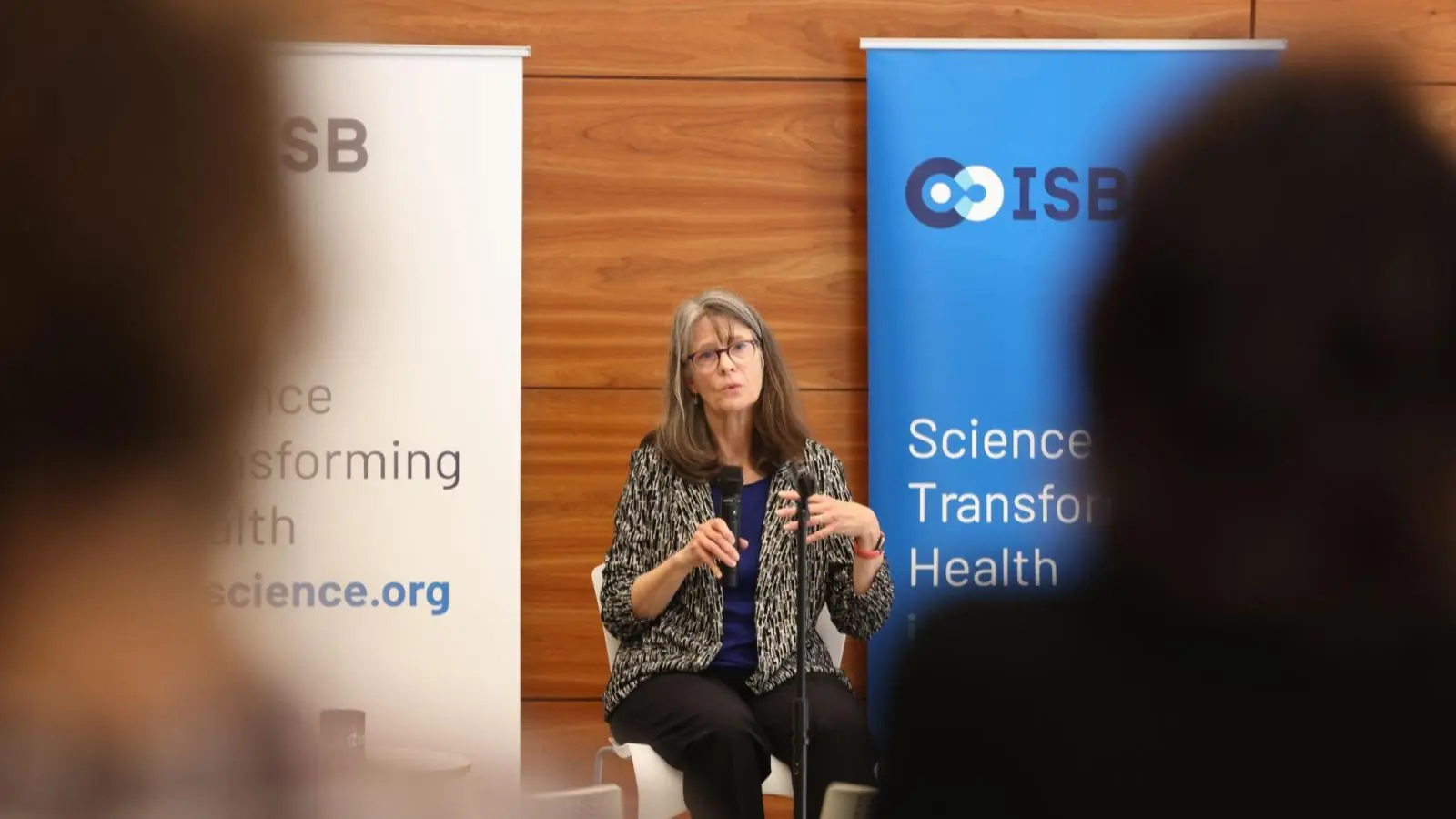
Nobel Laureate Dr. Mary Brunkow speaks at a press conference held at ISB on October 7, 2025. (Photo by Alex Garland for ISB)
ISB’s 2025 Nobel Prize Coverage
ISB’s Dr. Mary Brunkow received the 2025 Nobel Prize in Physiology or Medicine for transformative discoveries in immune tolerance.
Visit our Nobel Prize hub page for stories, photos, reactions celebrating this historic achievement, and more.