Media Coverage
Filter
-
- All Categories
- Brain Health
- Cancers
- Cell Dynamics
- Computational Biology
- COVID-19
- Disease
- Environment
- Experimental
- Healthspan
- Healthy Aging
- Immune System
- Infectious Disease
- Microbiome
- Nobel Prize
- Pregnancy Health
- Proteomics
- Scientific Wellness
Sort
-
- Default
- A-Z
- Z-A
- Newest
- Oldest
A Lung Cancer that Changes Its Identity May Be Hiding in Plain Sight
ISB’s Dr. Wei Wei contributed to research showing that certain lung cancers can shift identity and exist in hybrid states, helping explain treatment resistance and suggesting new approaches to diagnosis and therapy for these aggressive, often underdiagnosed tumors.
This Is How Many Times a Week You Should Be Pooing, According to scientists
Research from ISB’s Gibbons Lab suggests bowel movement frequency is linked to overall health, with a “Goldilocks zone” of about one to two per day. Too few or too many may be associated with risks to kidney, liver, and metabolic health.
‘Tour de Force’ Mouse Study Shows a Gut Microbe Can Promote Memory Loss
A new study finds that a gut bacterium may contribute to memory loss in mice, highlighting growing evidence of connections between the microbiome and brain health. ISB’s Sean Gibbons discusses the study’s implications.
Lee Hood’s Persistent Plan to Reinvent Medicine From the Ground Up
This profile details Lee Hood and his decades-long mission to transform medicine through systems biology and predictive health. Hood outlines how large-scale biological data and longitudinal studies could enable earlier detection of disease and more proactive healthcare.
Simulations of Your Gut May Predict Which Probiotics Will Stick
ISB researchers are using advanced computer simulations of the gut microbiome to explore how probiotics interact with existing microbial communities. The work highlights how modeling approaches can help predict when probiotic strains are likely to thrive — and when they may fail to take hold.
How Often You Poop Reveals a Lot About Your Health, Study Shows
A new SELF feature highlights research showing that bowel movement frequency — particularly one to two times per day — may be linked to overall health, including gut microbiome balance and toxin levels. ISB’s Sean Gibbons explains why this “Goldilocks zone” could signal optimal physiology.
Will Probiotics Work for You? Models Map Gut Metabolism to Predict Success
Researchers in the Gibbons Lab used computer models of gut metabolism to predict which probiotic strains will successfully establish in an individual’s microbiome and how prebiotics influence beneficial molecule production, a step toward more personalized microbiome-based interventions.
Scientists Discover That Defecating Too Often or Too Little Could Affect the Microbiota and Filter Toxic Substances into the Blood
A study led by researchers in ISB’s Gibbons Lab found that bowel movement frequency is linked to differences in gut microbiota and subtle changes in blood chemistry, suggesting that both infrequent and overly frequent defecation may relate to microbiome balance and toxin exposure risk.
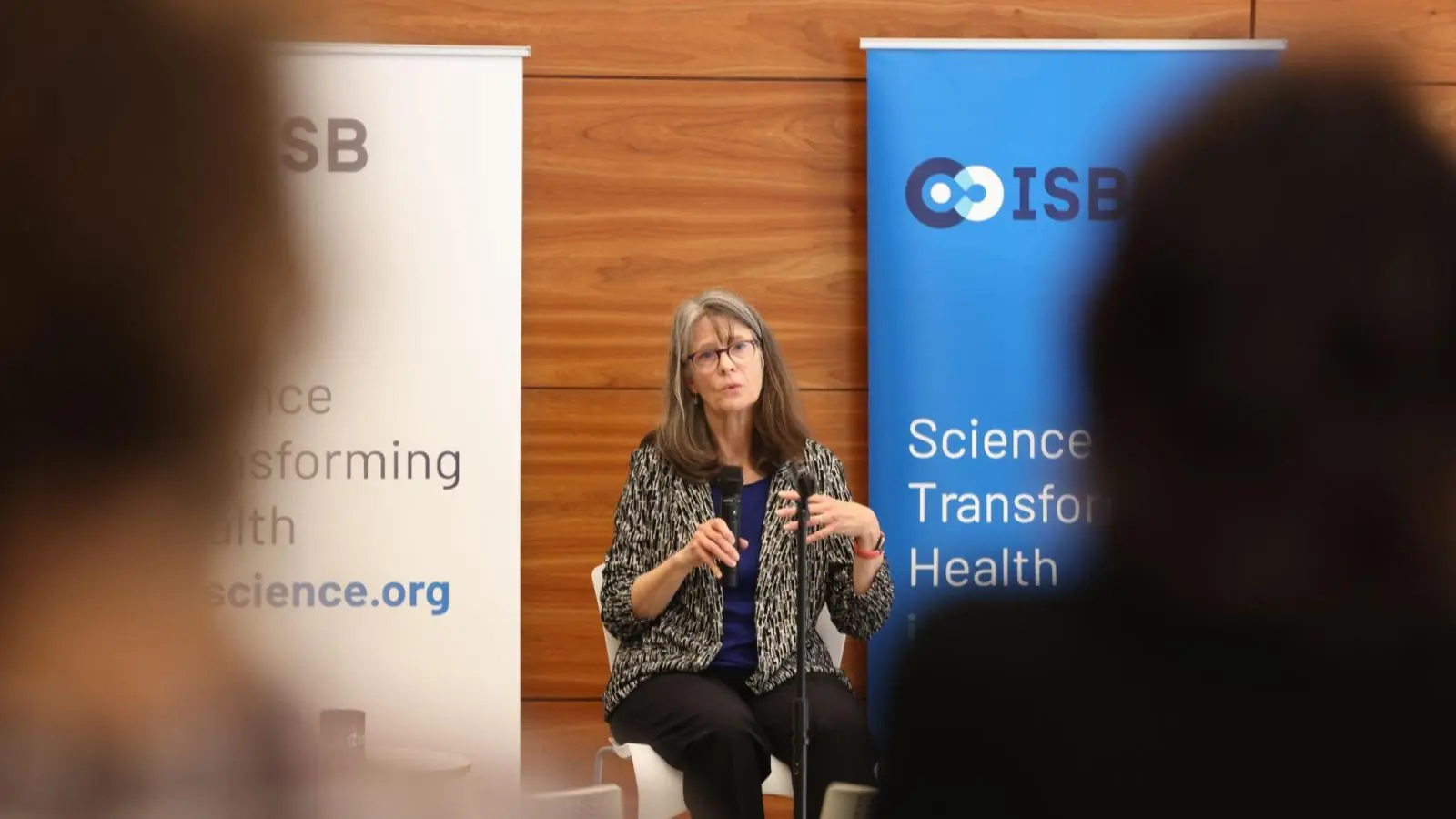
Nobel Laureate Dr. Mary Brunkow speaks at a press conference held at ISB on October 7, 2025. (Photo by Alex Garland for ISB)
ISB’s 2025 Nobel Prize Coverage
ISB’s Dr. Mary Brunkow received the 2025 Nobel Prize in Physiology or Medicine for transformative discoveries in immune tolerance.
Visit our Nobel Prize hub page for stories, photos, reactions celebrating this historic achievement, and more.