Media Coverage
Filter
-
- All Categories
- Brain Health
- Cancers
- Cell Dynamics
- Computational Biology
- COVID-19
- Disease
- Environment
- Experimental
- Healthspan
- Healthy Aging
- Immune System
- Infectious Disease
- Microbiome
- Nobel Prize
- Pregnancy Health
- Proteomics
- Scientific Wellness
Sort
-
- Default
- A-Z
- Z-A
- Newest
- Oldest
Having Long COVID Worsens Heart-Related Fitness, Study Finds
ISB’s Jim Heath and Jennifer Hadlock contributed to a multi-authored paper that was highlighted for finding that people with a higher burden of long COVID symptoms tend to be less physically active and exhibit poorer measures of cardiovascular fitness.
DNA Databases Unite to Create a Fully Open Resource for Transposable Element Research
A new collaboration between the Dfam and Repbase databases creates the first fully open resource for transposable element research. This story explores how the unified platform will accelerate genome annotation, evolutionary biology, and biomedical research by making decades of expertly curated data freely available to scientists worldwide.
As Graduates Push Back on AI, UW’s Nobel-Winning Commencement Speaker Takes Different Approach
This feature of Mary Brunkow ahead of the University of Washington commencement highlights her thoughtful perspective on artificial intelligence, scientific curiosity, and the enduring importance of human judgment in research. The story contrasts Brunkow’s measured approach with the broader national debate over AI at college graduations.
Congresswoman Pramila Jayapal Visits ISB, Honors Nobel Laureate Mary Brunkow
Congresswoman Pramila Jayapal visited ISB, meeting with Nobel laureate Mary Brunkow and ISB leadership for a conversation on ISB’s research, including our work on Long COVID. The visit included a tour of ISB’s labs, followed by a brief program in which Rep. Jayapal read a Congressional Statement for the Record she submitted in honor of Mary’s Nobel Prize and formally presented it to her.
Out of Sequence
This profile of Nobel laureate Mary Brunkow traces her journey from an undergraduate genetics student at the University of Washington to her groundbreaking discoveries in immunology. The feature explores the mentors, pivotal moments, and scientific curiosity that shaped her remarkable career.
Gut hacks, Polarized Jury Rooms, Food Friday, FilmWeek and More
Southern California Public Radio’s AirTalk featured Sean Gibbons in a discussion about gut health, microbiome science, and the evidence behind popular “gut hacks.” Gibbons separates fact from fiction while explaining what current research tells us about the gut microbiome and human health.
Ahead of the Curve: Lee Hood on Innovation & Genomics
ISB Co-founder Lee Hood in a wide-ranging conversation about systems biology, the Human Genome Project, personalized health, and the future of medicine. Hood discusses the evolution of systems biology and how advances in AI and multiomics are shaping the next generation of biomedical research.
The Human Genome Encodes for a New Category of Molecule
The Economist highlighted an international study co-authored by ISB researchers that identified a new class of protein-like molecules called “peptideins.” The feature explores how the discovery expands scientists’ understanding of the human genome and could reshape future research into cancer, immunotherapy, and human disease.
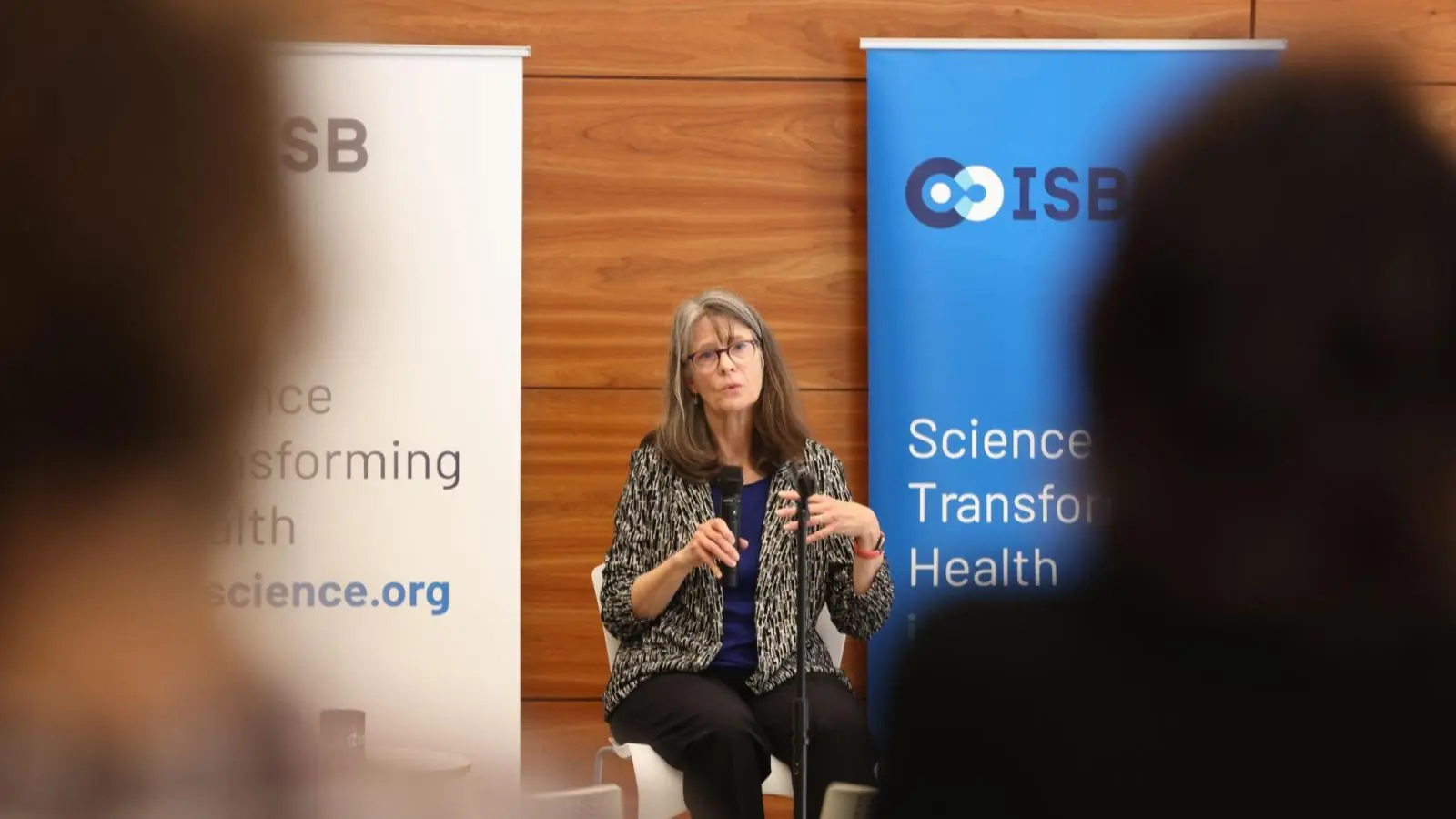
Nobel Laureate Dr. Mary Brunkow speaks at a press conference held at ISB on October 7, 2025. (Photo by Alex Garland for ISB)
ISB’s 2025 Nobel Prize Coverage
ISB’s Dr. Mary Brunkow received the 2025 Nobel Prize in Physiology or Medicine for transformative discoveries in immune tolerance.
Visit our Nobel Prize hub page for stories, photos, reactions celebrating this historic achievement, and more.