

Microbial Metabolites and Human Health Take Center Stage at ISB’s 2025 Virtual Microbiome Symposium
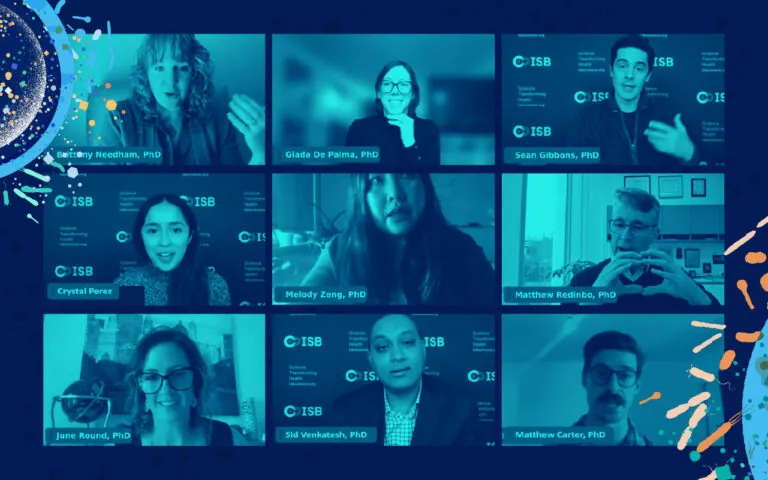
Six leading experts from across the field presented new insights to more than 1,000 registrants worldwide, with over 400 participants joining live.
The Gibbons Lab, led by Dr. Sean Gibbons, develops experimental and computational approaches to dissect and engineer the functional outputs of the human gut microbiome to advance personalized medicine.
Dr. Sean Gibbons with members of his lab. Photo credit: Scott Eklund / Red Box Pictures.
Our gut microbiome – the trillions of microbes in our digestive system – differs substantially even between people, even identical twins, and responds in unique ways to dietary intake. To design microbiome-informed personalized diets to optimize our health, the Gibbons Lab, with NIH funding, is studying how the microbiome influences our individual responses to diet.
A colorful bowl of food. Photo credit: Food Photographer, Unsplash, recolored by ISB.
The Gibbons Lab is developing an online dashboard called My Digital Gut to predict the impact of personalized dietary changes before people make them. The program assesses someone’s current diet (no food diary needed) and guides individuals towards personally optimal nutrition. My Digital Gut is in the testing phase, seeking to eventually inform personalized clinical care.
3D rendering of bacteria. Image credit: AdobeStock, recolored by ISB.
Infants born to mothers with HIV, but not infected, do not respond well to rotavirus (annually kills more than 200,000 children) vaccines, and their guts are depleted in the critical newborn microbe Bifidobacterium infantis. The Gibbons Lab, Seattle Children’s Research Institute, and South African researchers, where these births are frequent, are administering a B. infantis probiotic to see if it improves rotavirus vaccine efficacy.
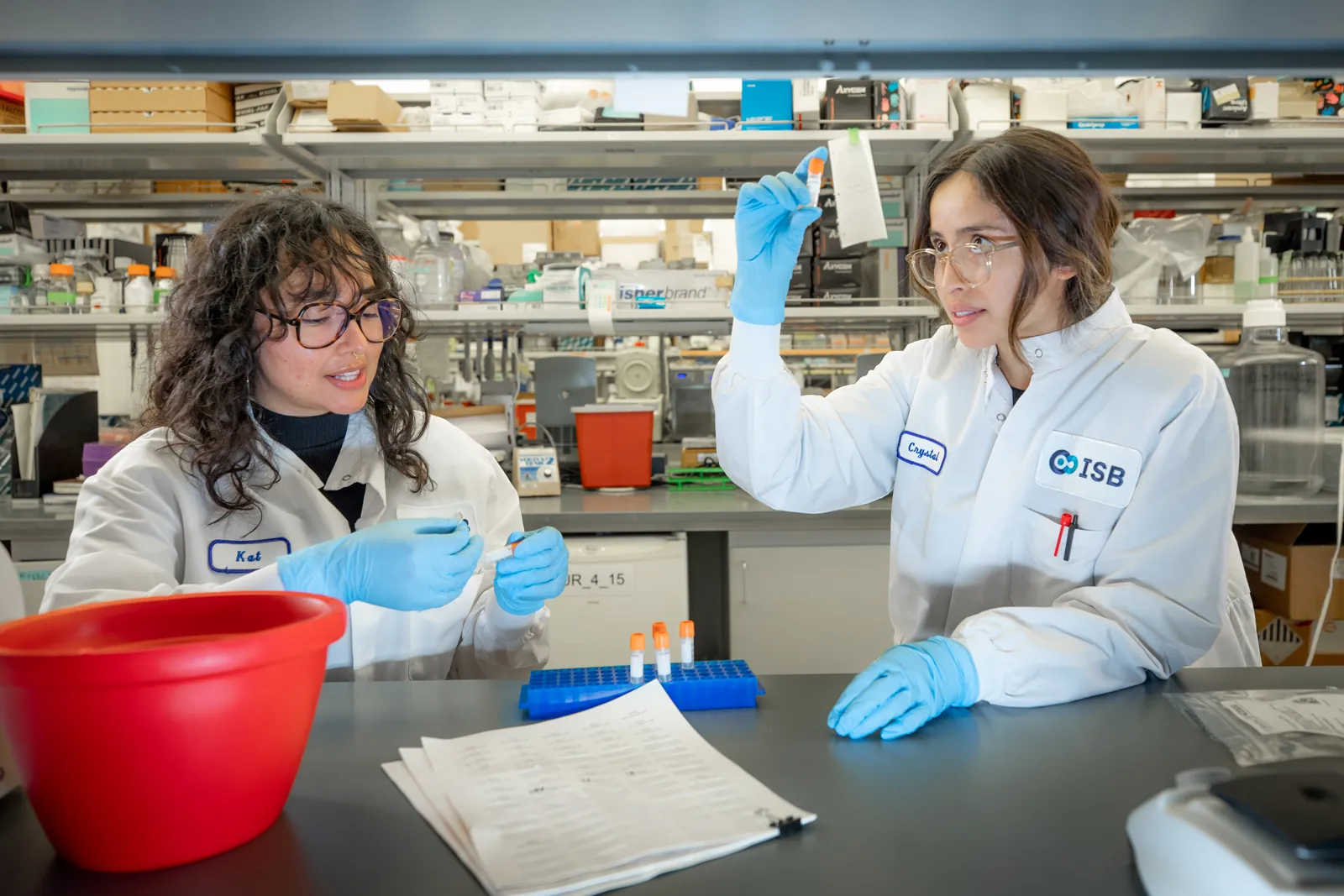
Gibbons Lab members working at ISB. Photo credit: Scott Eklund / Red Box Pictures.
ISB Associate Professor Dr. Sean Gibbons is creating an online dashboard called My Digital Gut that will give anyone the ability to predict the impact of nutritional changes before making them. By supporting ISB, you can help us leverage our growing knowledge of the gut microbiome to make nutrition and healthcare personalized, predictive and preventive.
Six leading experts from across the field presented new insights to more than 1,000 registrants worldwide, with over 400 participants joining live.
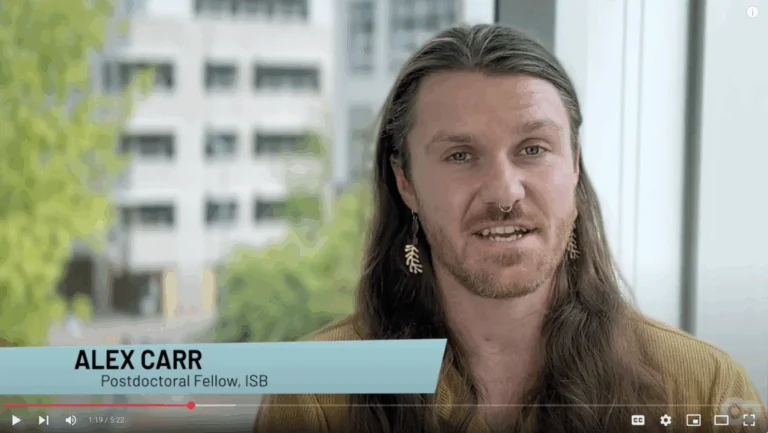
Postdoctoral fellows are the lifeblood of research institutions, yet their contributions are often underrecognized. At the Institute for Systems Biology (ISB), postdocs enter the scientific workforce with passion, vision, and advanced training – bringing the fresh ideas that fuel discovery.
Researchers at ISB have developed personalized models to predict C. diff colonization risk and test targeted probiotics. This approach could prevent infection before it starts and paves the way for precision microbiome therapies tailored to individual gut ecosystems.
Associate Professor
ISB