Skip to content
  • Who We Are
    • About Us
      • Nobel Prize
      • ISB Today
      • What is Systems Biology?
      • Our History
      • Contact ISB
    • People
      • Leadership
      • Board of Directors
      • Director Emeritus
      • Faculty
      • Education Directors
      • Principal Scientists
      • Senior Research Scientists
      • Affiliate Faculty
      • Scientific Advisory Board
    • Labs
      • All Labs
    • Careers
      • Work At ISB
      • Faculty Development
      • Postdoctoral Fellowships
      • Grad Student Opportunities
      • Internships
  • What We Do
    • Research Areas
      • All Research Areas
      • Cancer
      • Health
      • Infectious Disease
      • Chronic Illness
      • Environment
    • Education and Training
      • Education Initiatives
      • Educator Resources
      • Student Programs
      • Courses and Symposia
    • Published Research
      • Publications
    • Open Source Software
      • Software and Downloads
    • Services
      • Olink® Services
      • Proteomics Services
  • News and Events
    • News
      • ISB News
    • Newsletter
      • Subscribe
    • Events
      • Upcoming Events
      • Events Archive
    • Media
      • Media Coverage
      • Press Releases
      • Media Inquiries
    • Social Media
      • LinkedIn
      • Bluesky
      • X
      • Instagram
      • Facebook
      • YouTube
  • Ways To Give
    • Ways To Give
      • How You Can Help
    • Giving Priority Areas
      • My Digital Gut
      • STEM Education
      • HPV+ Cancer
      • Postdoctoral Fellowship Fund
    • Team
      • Meet Us
    • Donate Now
      • Donate →
Donate
clear

Featured News

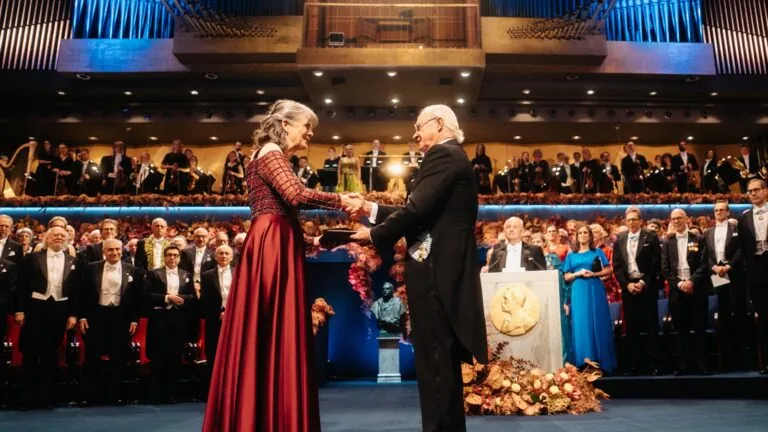
A photograph depicting a woman in a sparkling ballgown shaking hands with a man in a tuxedo on a stage with standing dignitaries behind them.

Posted: December 16, 2025

People Press Release Hood Lab
ISB’s Dr. Mary Brunkow Wins 2025 Nobel Prize in Physiology or Medicine

ISB’s Dr. Mary Brunkow Wins 2025 Nobel Prize in Physiology or Medicine

The prize recognizes foundational discoveries about regulatory T cells and the FOXP3 gene that redefined immune tolerance and opened avenues to treat autoimmune disease, enable transplantation, and advance immuno-oncology. ISB celebrates Dr. Brunkow’s leadership and collaborative science.

ISB’s Dr. Mary Brunkow Wins 2025 Nobel Prize in Physiology or Medicine
Illustration of Drs. Mary Brunkow, Fred Ramsdell, and Shimon Sakaguchi, recipients of the 2025 Nobel Prize in Physiology or Medicine.

Posted: October 23, 2025

Cancer People Press Release
The Science Behind the Nobel Prize

The Science Behind the Nobel Prize

The pioneering work of Mary Brunkow and Fred Ramsdell began with a mysterious mutant mouse known as “scurfy,” leading them to identify the FOXP3 gene and unlock how regulatory T cells prevent autoimmune disease — discoveries that now point to new treatments in cancer and autoimmunity.

The Science Behind the Nobel Prize

More News

 
Dr. Christian Diener, postdoc in ISB's Gibbons Lab.

Posted: January 21, 2020

Health Gibbons Lab Microbiome
New Metabolic Modeling Tool Allows Microbiome Researchers to Map Community Ecology to Ecosystem Function

New Metabolic Modeling Tool Allows Microbiome Researchers to Map Community Ecology to Ecosystem Function

A promising new open-source metabolic modeling tool provides microbiome researchers a path forward in predicting ecosystem function from community structure. News of the software package, called MICOM, was developed in part by researchers in ISB’s Gibbons Lab, and its uses were published in the journal mSystems.

New Metabolic Modeling Tool Allows Microbiome Researchers to Map Community Ecology to Ecosystem Function
gift box graphic

Posted: December 13, 2019

Philanthropy
A Scientist-Approved Science-Themed Holiday Gift Guide

A Scientist-Approved Science-Themed Holiday Gift Guide

When putting together a science-themed gift guide, you have to go to the source. So we asked ISB’s researchers for their ideas and to share what’s on their lists. Whether you’re buying for a scientist or wanting to give the gift of science, this gift guide is for you.

A Scientist-Approved Science-Themed Holiday Gift Guide
biological age thumbnail

Posted: November 22, 2019

Health Hood Lab Healthspan and Longevity
How Old Are You? Your Body Might Disagree With That Answer

How Old Are You? Your Body Might Disagree With That Answer

Researchers at ISB harnessed deep molecular and physiological information to determine an individual’s biological age, which they found was reflective of overall health compared to chronological age. The findings were published in the Journals of Gerontology: Series A.

How Old Are You? Your Body Might Disagree With That Answer
Valerie Logan Luncheon emcee Heather Logan

Posted: November 8, 2019

Education Logan Center for Education Hands-on Learning
8th Annual Valerie Logan Luncheon Shines Light on ISB Education

8th Annual Valerie Logan Luncheon Shines Light on ISB Education

The 8th Annual Valerie Logan Luncheon celebrated ISB Education’s mission of engaging entire school systems — from principals and administrators to teachers and students — to ensure all students are STEM literate. Nearly 100 people attended the event at ISB, and generously gave more than $100,000 for ISB Education.

8th Annual Valerie Logan Luncheon Shines Light on ISB Education
mosquito

Posted: October 31, 2019

Infectious Disease Moritz Lab Malaria
Malaria Researchers’ Findings May Have Implications for Preventing Spread of Deadly Disease

Malaria Researchers’ Findings May Have Implications for Preventing Spread of Deadly Disease

ISB researchers and their collaborators are using systems biology approaches to learn how the malaria parasite is able to transfer to humans via the bite of an infected mosquito. The information they have uncovered may help identify new ways to prevent people from contracting the deadly disease.

Malaria Researchers’ Findings May Have Implications for Preventing Spread of Deadly Disease
isb poster graphic

Posted: September 13, 2019

Philanthropy
ISB Unveils New Brand Ahead of 20th Anniversary

ISB Unveils New Brand Ahead of 20th Anniversary

We created a new brand identity — including logo and tag line — to reflect ISB’s evolution since our inception in 2000, and ahead of our 20th anniversary. ISB is proud to be a part of the vibrant research community in Seattle, and is committed to translational and collaborative science.

ISB Unveils New Brand Ahead of 20th Anniversary
View All News

  • Who We Are
    • Work At ISB
    • People
  • What We Do
    • Research
    • Publications
  • News and Events
    • Media Inquiries
    • News
  • Services
    • Olink Services
    • Proteomics Services
  • Other
    • Sponsored Projects Resources
    • COI
ISB logo (1-color)
Donate Contact Us

Subscribe to Molecular Me, where we share news of our transformational research, devoted scientists and educators, upcoming events, and more.

© 2026 Institute for Systems Biology (ISB). All Rights Reserved
  • Login
  • Intranet
  • Purchase Terms
  • Terms of Service
  • Privacy Policy
Web Design by T-F