Media Coverage
Filter
-
- All Categories
- Brain Health
- Cancers
- Cell Dynamics
- Computational Biology
- COVID-19
- Disease
- Environment
- Experimental
- Healthspan
- Healthy Aging
- Immune System
- Infectious Disease
- Microbiome
- Nobel Prize
- Pregnancy Health
- Proteomics
- Scientific Wellness
Sort
-
- Default
- A-Z
- Z-A
- Newest
- Oldest
Here’s what your pooping frequency says about your health
Science reporter Torah Kachur interviewed Dr. Sean Gibbons for this radio report showing that the frequency of your bowel movements can tell you a lot about your health.
Reverse Brain Aging: Tools and Techniques You Need to Know with Dr. Leroy Hood
Dr. Lee Hood was interviewed by Dr. Mark Hyman and talked about the tools and techniques to reverse brain aging.
Gut Microbiome ‘Digital Twin’ Simulates Personalized Responses to Diet
Drs. Sean Gibbons, Nick Quinn-Bohmann, and Christian Diener are quoted in this story detailing their novel way of simulating a personalized, microbiome-mediated response to diet.
Personalized Healthcare is More Effective and it's Already Here
Dr. Lee Hood spoke with Drs. Grant Cooper and Zinovy Meyler for an interview that spanned the transformative role of AI in healthcare, and much more.
The Age of Scientific Wellness …
Drs. Lee Hood and Nathan Price were podcast guests, where they discussed scientific wellness, genome sequencing, genetic vs. lifestyle risks, direct-to-consumer testing, and more.
AI Assistance for Planning Cancer Treatment
Dr. Ilya Shmulevich, who passed away in April 2024, was interviewed for this story and talked about his lab’s digital twin project.
Illuminating our Microbial Support System to Improve Health
Dr. Sean Gibbons Gibbons is featured in a video for the Environmental Health and Microbiome Research Center (EHMBRACE).
Research unveils effective STEM program models for high school students from historically marginalized communities
ISB-led research highlights the transformative power of informal STEM learning in addressing societal challenges and the ease with which many organizations could provide these important opportunities.
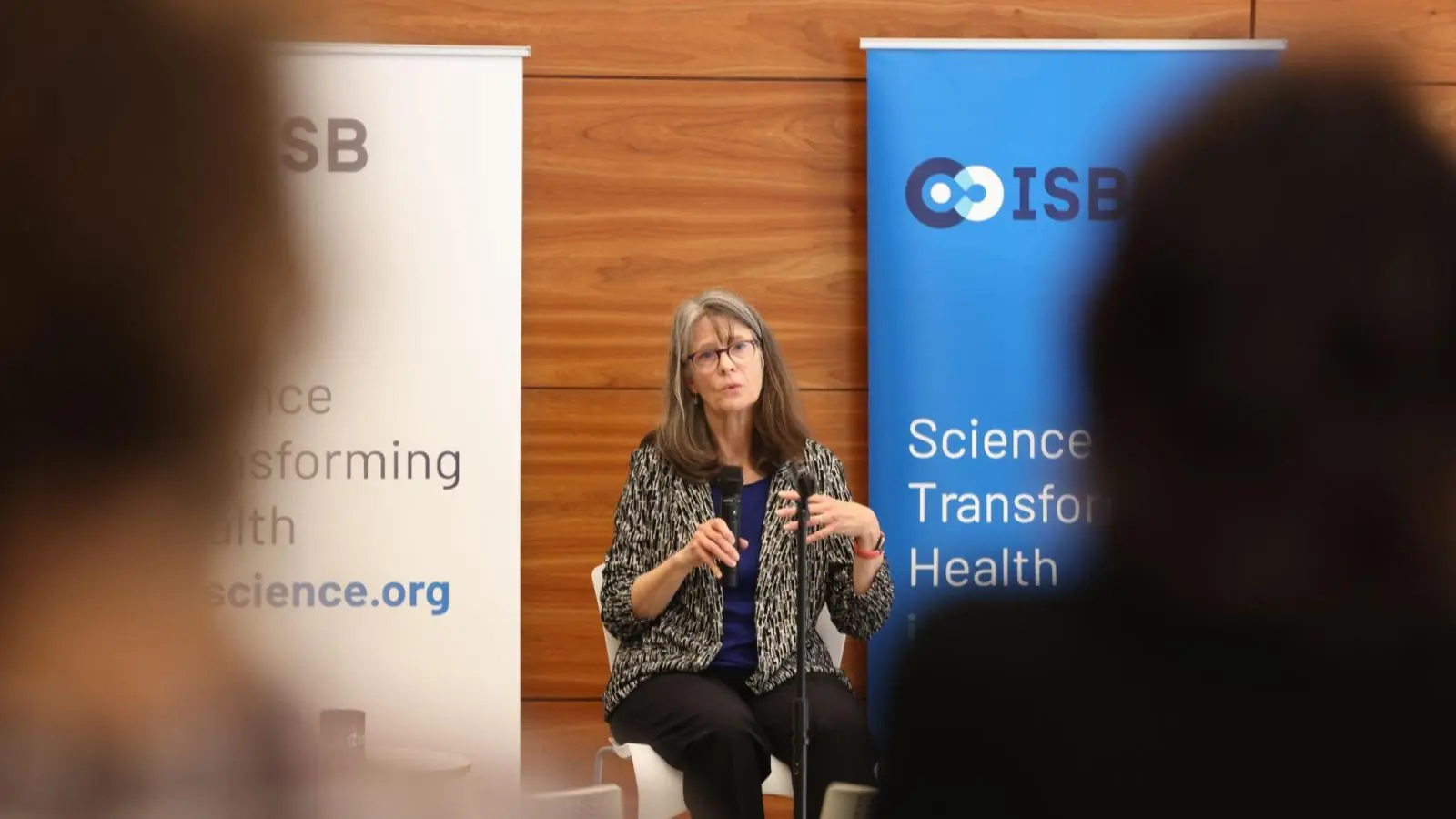
Nobel Laureate Dr. Mary Brunkow speaks at a press conference held at ISB on October 7, 2025. (Photo by Alex Garland for ISB)
ISB’s 2025 Nobel Prize Coverage
ISB’s Dr. Mary Brunkow received the 2025 Nobel Prize in Physiology or Medicine for transformative discoveries in immune tolerance.
Visit our Nobel Prize hub page for stories, photos, reactions celebrating this historic achievement, and more.