Media Coverage
Filter
-
- All Categories
- Brain Health
- Cancers
- Cell Dynamics
- Computational Biology
- COVID-19
- Disease
- Environment
- Experimental
- Healthspan
- Healthy Aging
- Immune System
- Infectious Disease
- Microbiome
- Nobel Prize
- Pregnancy Health
- Proteomics
- Scientific Wellness
Sort
-
- Default
- A-Z
- Z-A
- Newest
- Oldest
Trio Wins Nobel Prize in Medicine for Discoveries on Immune System
A clear, big-picture read that follows the discovery of the immune system’s “brakes” from early genetic clues to a Nobel-morning payoff – spotlighting Mary Brunkow’s role and how regulatory T cells reshaped care for autoimmune disease and beyond.
Photos show Mary E. Brunkow waking up to the news she is a Nobel winner in medicine
A photographer from The Associated Press was on Mary Brunkow’s front door in the early hours of October 6, 2025, to capture her reaction to being named a recipient of the Nobel Prize in Physiology or Medicine. This story publishes a series of photos that depict Brunkow’s surprise and emotion.
How a scrappy biotech startup backed by Microsoft’s co-founders set the stage for two Nobel winners
GeekWire traces ISB’s Mary Brunkow’s Nobel-winning FOXP3 discovery back to Darwin Molecular, a scrappy Seattle biotech backed by Microsoft co-founders Bill Gates and Paul Allen. Brunkow recounts the team science that pinpointed FOXP3 and the local celebration at ISB as her work reshapes immunology.
She didn’t believe she won the Nobel — until a photographer showed up at her Seattle door
The Seattle Times profiles ISB’s Mary Brunkow – newly named 2025 Nobel laureate – through a very Seattle awakening: she muted predawn calls from Sweden, then believed only when a photographer arrived at her door. The story pairs that moment with her FOXP3/Treg discovery that reshaped immune tolerance.
Immune system breakthrough wins Nobel medicine prize for US, Japan scientists
Reuters highlights ISB’s Mary Brunkow as co-winner of the 2025 Nobel in Physiology or Medicine, spotlighting her mouse-genetics discovery of FOXP3 as the hallmark of regulatory T cells and peripheral immune tolerance – work now powering Treg-based trials and new therapies for autoimmunity, transplantation, and cancer.
Medicine Nobel Goes to Scientists Who Revealed Secrets of Immune System ‘Regulation’
A story that maps the road from puzzling autoimmunity to the immune system’s “brakes” – regulatory T cells and FOXP3 – and the moment those clues crystallize into a Nobel morning for Mary Brunkow and collaborators.
Nobel Prize in medicine goes to trio of scientists for discovering how the immune system is kept in check
Pre-dawn calls meet decades of discovery: a crisp walk through how the immune system’s “brakes” (FOXP3 and regulatory T cells) propelled Mary Brunkow to a Nobel, and what that means for autoimmune care, cancer, and transplants.
2025 Nobel Prize in medicine goes to Mary Brunkow, Fred Ramsdell, and Shimon Sakaguchi for immune system discoveries
STAT News details why Mary E. Brunkow (now at ISB), Fred Ramsdell, and Shimon Sakaguchi won the 2025 Medicine Nobel – discoveries in peripheral immune tolerance (regulatory T cells/FOXP3) that illuminate autoimmunity and inform new therapies.
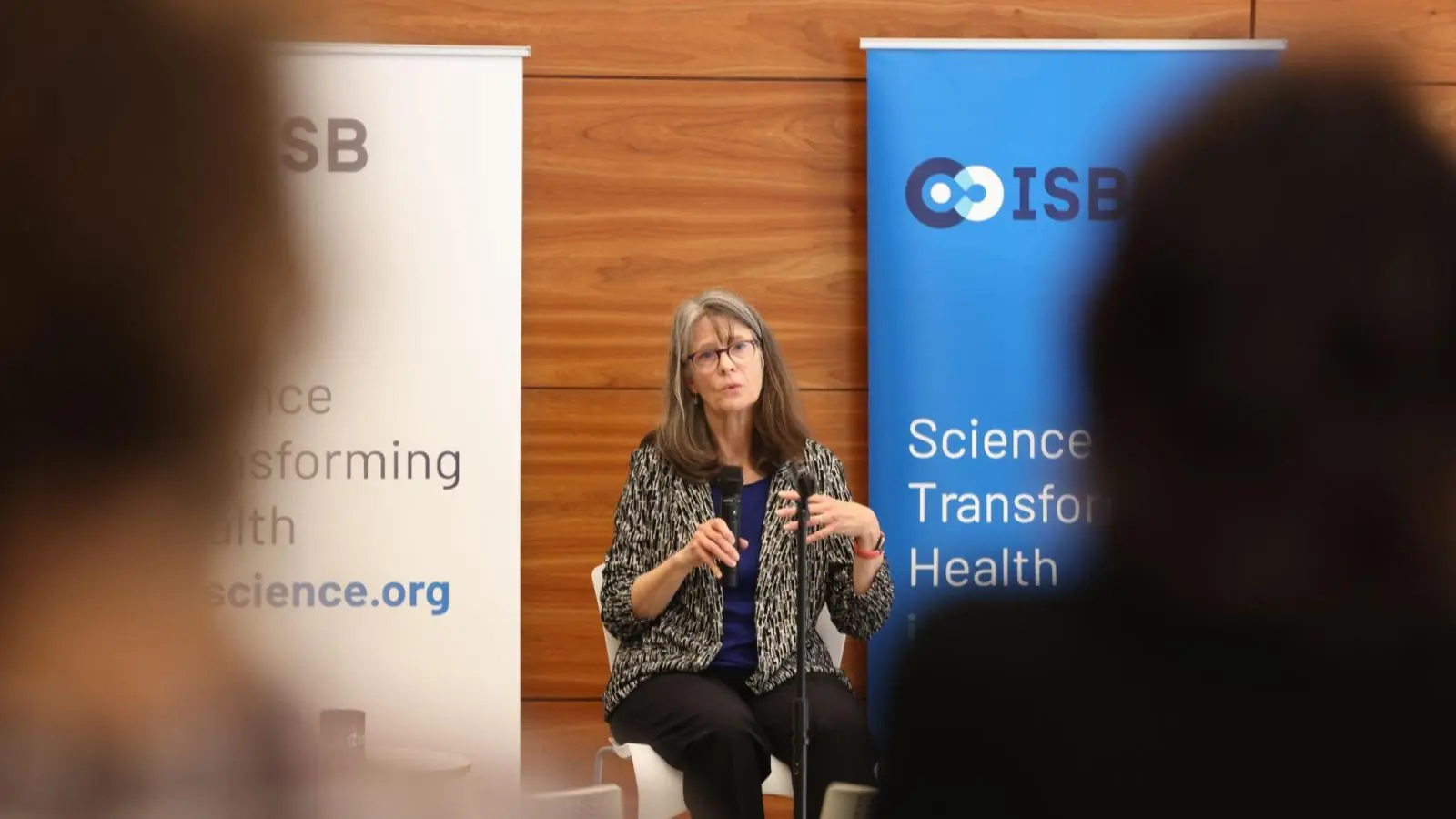
Nobel Laureate Dr. Mary Brunkow speaks at a press conference held at ISB on October 7, 2025. (Photo by Alex Garland for ISB)
ISB’s 2025 Nobel Prize Coverage
ISB’s Dr. Mary Brunkow received the 2025 Nobel Prize in Physiology or Medicine for transformative discoveries in immune tolerance.
Visit our Nobel Prize hub page for stories, photos, reactions celebrating this historic achievement, and more.