How gut bacteria survive viral attack
ISB researchers use single-cell sequencing to reveal hidden defenses against bacteriophages — and introduce a powerful new way to study phage-microbe interactions.
The Kuchina Lab, led by Dr. Anna Kuchina, develops and applies single-cell genomic and imaging approaches for understanding the behavior of bacterial communities such as biofilms and microbiota at the level of an individual organism.

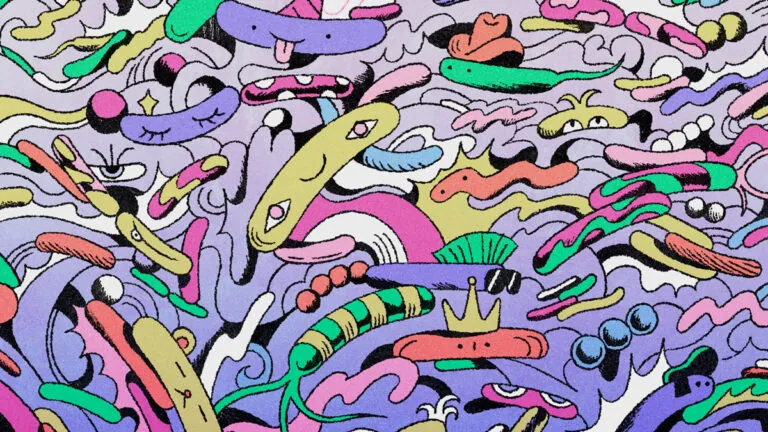
llustration of the individuality of microbes in a given bacterial community. Image credit: Niv Bavarsky for ISB.
The gut microbiome – the hundreds of bacterial species living in the digestive tract – is a complex system with a not fully understood impact on health. Anna Kuchina, the recipient of a promising investigators NIH grant (MIRA), is working to improve the design of probiotics and other microbiome therapies by understanding how gut bacteria interact and cooperate.
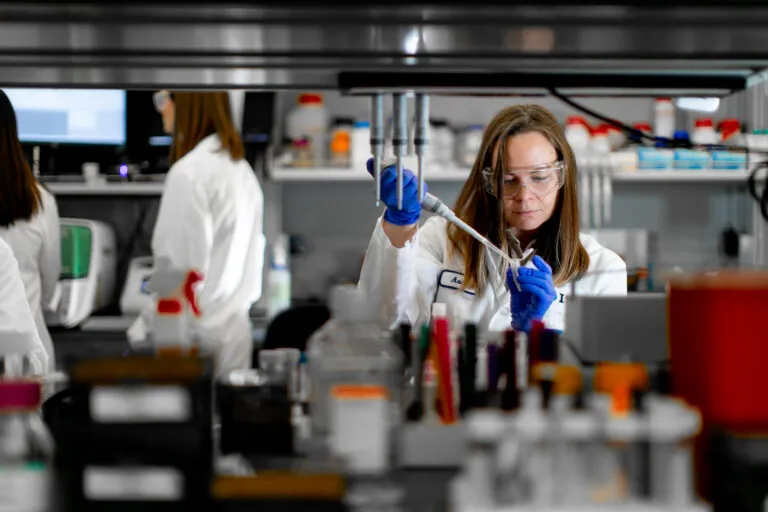
Dr. Anna Kuchina working in the lab at ISB. Photo credit: Scott Eklund / Red Box Pictures.
Different bacteria populating the oral cavity form a tight network of interactions that play a role in periodontal disease. With NIH funding, the UW Department of Periodontics and the Kuchina Lab use Kuchina’s microSPLiT technology to understand how bacteria from the oral cavity interact with each other and how these physical interactions affect oral health.
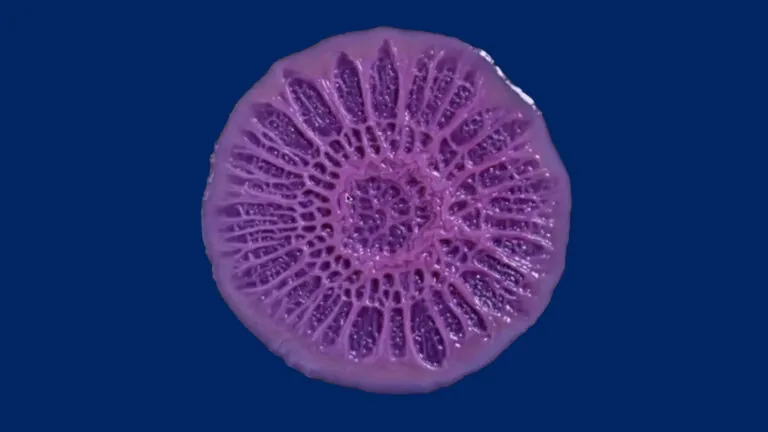
Still from a time-lapse video of growing Pseudomonas aeruginosa biofilm. Image credit: Scott Chimileski.
How bacteria – including infectious ones – coalesce into assemblages called biofilms that help them resist antibiotics is not well understood. Assistant Professor Anna Kuchina invented a technology (microSPLiT) that allows researchers to individually study hundreds of thousands of bacteria in a single experiment. The recipient of a promising investigators NIH grant (MIRA), her Lab focuses on closing the gap in our understanding of bacterial biofilms.
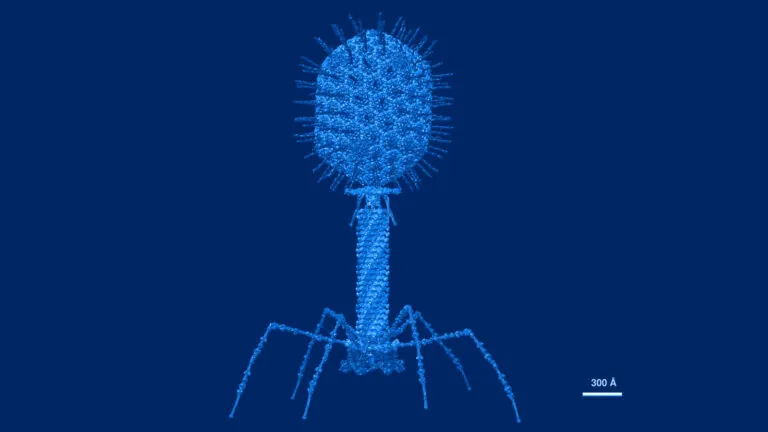
Atomic structural model of bacteriophage T4 in UCSF Chimera software using pdbs of the individual proteins. Image credit: Victor Padilla-Sanchez, PhD. CC BY-SA 4.0. Image has been recolored by ISB.
Antibiotics – the most common treatment for bacterial infections – deplete many species in the gut microbiome and can lead to resistance. Phage therapy, an alternative to antibiotics, relies on viruses called bacteriophages that each target only one type of bacteria. To potentially improve phage therapies, the Kuchina Lab is investigating how gut microbiota species defend against bacteriophage attacks.
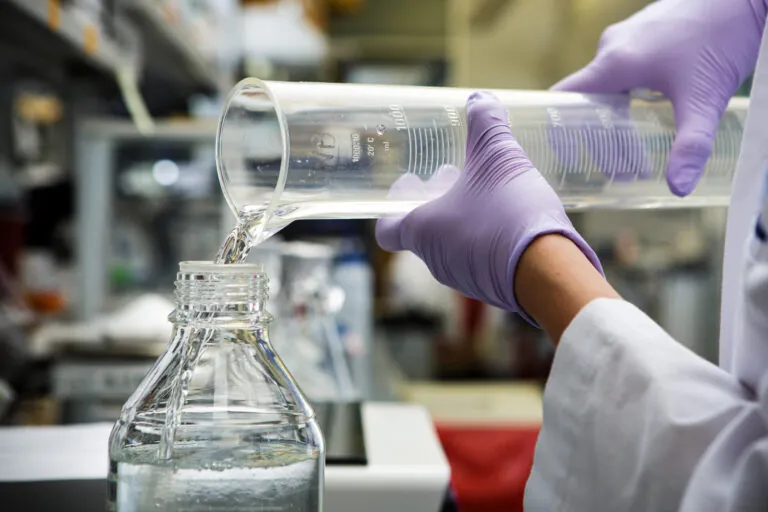
Lab action shot. Photo credit: Scott Eklund / Red Box Pictures.
Microbial biomanufacturing uses bacteria or other cells from renewable resources to make fuels and other products. Today, up to a third of the carbon generated through this process is released as carbon dioxide waste. With funding from the Department of Energy, the Kuchina Lab, with the University of Washington and others, is learning how to make this process more carbon-efficient and sustainable.
ISB researchers use single-cell sequencing to reveal hidden defenses against bacteriophages — and introduce a powerful new way to study phage-microbe interactions.
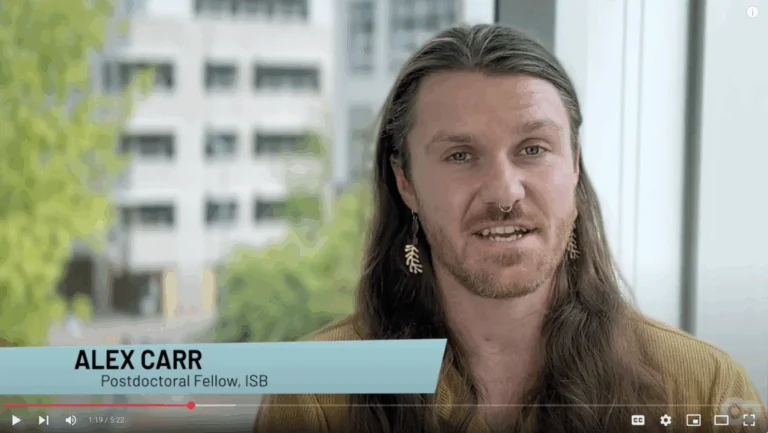
Postdoctoral fellows are the lifeblood of research institutions, yet their contributions are often underrecognized. At the Institute for Systems Biology (ISB), postdocs enter the scientific workforce with passion, vision, and advanced training – bringing the fresh ideas that fuel discovery.

Bacteria are much more than single-celled organisms swimming around. Bacteria also form communities called biofilm, and work together to maintain the microbial community. Biofilm is just one research area of ISB’s Kuchina Lab. In this Research Roundtable presentation, ISB Assistant Professor Dr. Anna Kuchina details her work studying biofilms.
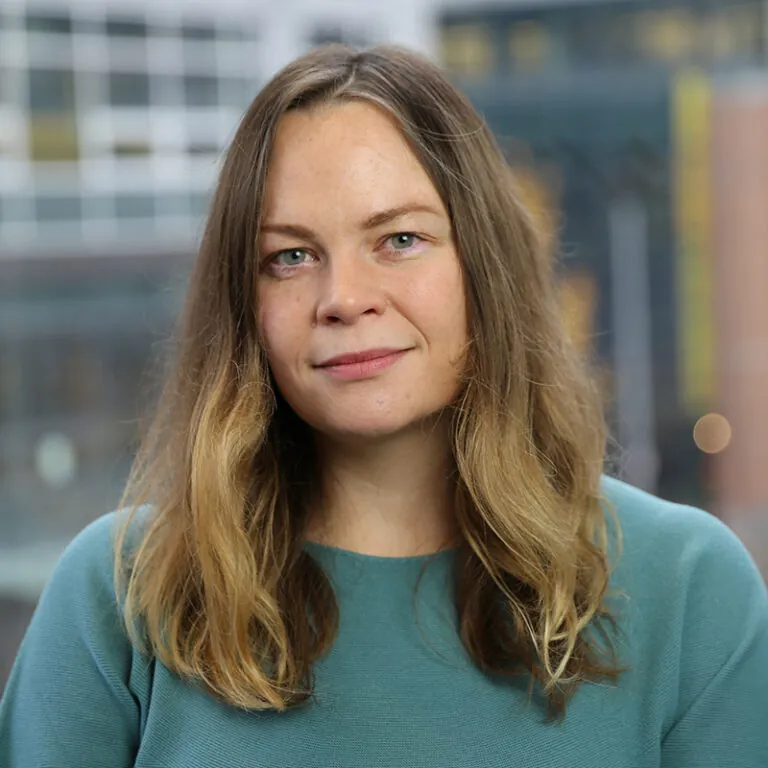
Assistant Professor
ISB