Speaker Icon

9 Speakers

Read Bios
Panel Discussion Icon

2 Panel Discussions

View Schedule
Date Icon

December 9th 2026

Register Now

2026 ISB Frontiers in Computational Biology Symposium

Computational biology has been at the heart of ISB’s approach to science since our founding, providing new ways to understand the complexity of human biology and disease. Today, advances in artificial intelligence and machine learning, single-cell and spatial technologies, multi-omics, and mechanistic modeling are rapidly expanding what is possible.

The ISB Frontiers in Computational Biology Symposia Series brings together leading scientists from ISB, the Seattle research community, and institutions across the country to explore where the field is headed next. Through a day of scientific presentations and discussion, researchers will share emerging approaches for turning increasingly complex biological data into deeper understanding of biological systems, disease mechanisms, and human health.

The 2026 symposium, themed “AI, Multi-Omics, and the Future of Human Health,” will be held on December 9, 2026. Join us in person at ISB in Seattle, or stream the presentations and discussions via our virtual offering.

2026 ISB Frontiers in Computational Biology Symposium

Computational biology has been at the heart of ISB’s approach to science since our founding, providing new ways to understand the complexity of human biology and disease. Today, advances in artificial intelligence and machine learning, single-cell and spatial technologies, multi-omics, and mechanistic modeling are rapidly expanding what is possible.

The ISB Frontiers in Computational Biology Symposia Series brings together leading scientists from ISB, the Seattle research community, and institutions across the country to explore where the field is headed next. Through a day of scientific presentations and discussion, researchers will share emerging approaches for turning increasingly complex biological data into deeper understanding of biological systems, disease mechanisms, and human health.

The 2026 symposium, themed “AI, Multi-Omics, and the Future of Human Health,” will be held on December 9, 2026. Join us in person at ISB in Seattle, or stream the presentations and discussions via our virtual offering.

Symposium Schedule
Learn more about our presenters below.
8:30–9 a.m.
Registration, Coffee & Light Breakfast
9–9:10 a.m.
Welcome & Opening Remarks by Jim Heath
SESSION 1
Chair: Nitin Baliga, ISB
9:10–9:40 a.m.
Phil Bradley, Fred Hutch Cancer Center
“Prediction and design of T cell receptor specificity”
25-minute presentation + 5-minute Q&A
9:40–10:10 a.m.
Peter Clark, Ai2
“From Data to Discovery: Building AI Systems to Accelerate Scientific Research”
25-minute presentation + 5-minute Q&A
10:10–10:25 a.m.
Break
10:25–10:55 a.m.
Sudipta Sengupta, AWS
“Talk Title TBD”
25-minute presentation + 5-minute Q&A
10:55–11:25 a.m.
Jennifer Hadlock, ISB
“New Paths Toward Disease Prevention: Accelerating Research on Preclinical Disease”
25-minute presentation + 5-minute Q&A
11:25–11:55 a.m.
Session 1 Panel Discussion
Moderated by Nitin Baliga
11:55 a.m.–1 p.m.
Catered Networking Lunch
Meal Provided by ISB
SESSION 2
Chair: Anna Kuchina, ISB
1–1:30 p.m.
Stephanie Hicks, Johns Hopkins University
“From Spatial Maps to Biological Mechanisms in the Human Brain: Computational Biology in the Age of AI”
25-minute presentation + 5-minute Q&A
1:30–2 p.m.
Noa Rappaport, ISB
“Talk Title TBD”
25-minute presentation + 5-minute Q&A
2–2:30 p.m.
Rich Bonneau, Genentech
“A Hierarchical Framework for Improving and Orchestrating Drug Discovery”
25-minute presentation + 5-minute Q&A
2:30–2:45 p.m.
Break
2:45–3:15 p.m.
Jingyi Jessica Li, Fred Hutch Cancer Center
“FDR Calibration with Synthetic Null Data: Controlling False Discoveries While Maintaining Power in High-Throughput Biology”
25-minute presentation + 5-minute Q&A
3:15–3:45 p.m.
Emek Demir, OHSU
“From Fragments to Systems: How Can We Assemble Biological Mechanisms in the Age of AI?”
25-minute presentation + 5-minute Q&A
3:45–4:15 p.m.
Session 2 Panel Discussion
Moderated by Anna Kuchina
4:15–4:25 p.m.
Closing Remarks by Jim Heath
4:25–5 p.m.
Informal Networking & Symposium Conclusion

2026 Symposium Speakers

Emcee and Session Moderators

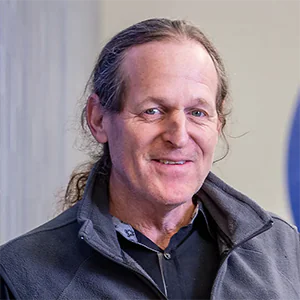
Jim Heath, PhD
Jim Heath, PhD
President and Professor
Institute for Systems Biology

Dr. James R. Heath is President and Professor at Institute for Systems Biology in Seattle. Heath also has Affiliate Faculty appointments at the University of Washington Bioengineering, Physics and Chemistry departments. Formerly, he was the Elizabeth W. Gilloon Professor of Chemistry at Caltech, Professor of Molecular and Medical Pharmacology at UCLA, and served as co-director of the Parker Institute for Cancer Immunotherapy at UCLA.

Heath has had a profound impact on ISB since taking over leadership in 2018. He continues to make important discoveries in the field of cancer immunotherapy, and in 2022 was selected to lead a National Cancer Institute Comprehensive Cancer Center to study sequential targeted inhibitors and immunotherapies.

At the beginning of the COVID-19 pandemic, Heath quickly pivoted the focus of his lab and collaboratively worked with others within and beyond ISB to uncover secrets behind COVID-19 and long COVID. He published research that has changed how COVID-19 and long COVID is understood, and leads the Pacific Northwest consortium of the NIH-funded RECOVER study, which aims to understand the long-term effects of COVID.

Heath received his PhD in 1988 from Rice University, where he was the principal graduate student involved in the discovery of C60 and the fullerenes. He was a Miller Fellow at UC Berkeley before joining the research staff at IBM Watson Labs in 1991. He took a faculty position at UCLA in 1994, and moved to Caltech in 2003.

He has received several awards and honors, including the Irving Weinstein Award from the American Association of Cancer Researchers, and the Sackler Prize in the Physical Sciences. In 2009, he was named one of the top seven innovators in the world by Forbes Magazine.

Heath has founded or co-founded several companies, including BioAnalytica, PACT Pharma (acquired by AmplifyBio in 2023), Integrated Diagnostics (acquired by Biodesix in 2018), Indi Molecular (acquired by Regeneron in 2022), CTI Molecular Imaging (acquired by Siemens in 2005), Sofie Biosciences, Isoplexis (acquired by Berkeley Lights in 2023), and NanoSys (acquired by Shoei in 2023).

Nitin Baliga, MSc, PhD
Senior Vice President, Director and Professor
Institute for Systems Biology

Nitin Baliga leads a cross-disciplinary team of scientists to address complex problems relevant to global health, personalized medicine, energy, and environment. His team uses a systems approach to construct predictive models of cellular and molecular networks within pathogens, cancer cells, and environmental microbes to enable biotechnologies to overcome drug resistance, find new drugs, predict consequence of climate change, and manufacture biorenewables. Dr. Baliga is also actively engaged in science education, and is passionate about developing and disseminating current science curriculum and authentic cross-disciplinary practices to schools. His contributions to HS education have had worldwide impact, and have won awards including the Alvin J. Thompson award. As a Professor at the Institute for Systems Biology, he was one of the founding members, and currently serves as the Director and Senior Vice President.

Dr. Baliga did his early schooling in Mumbai, India, where he received a B.Sc. in Microbiology (1992) from Ruia College within the Mumbai University system. In 1992, Dr. Baliga entered a national competition and won the highly coveted Central Government of India sponsored Department of Biotechnology studentship, which supported his graduate studies in Marine Biotechnology at Goa University. After getting a M.Sc. in Marine Biotechnology in 1994, Dr. Baliga won the prestigious Council for Scientific and Industrial Research fellowship through another Central Government of India-sponsored national competition. After completing his Ph.D. in Microbiology in 2000 at the University of Massachusetts at Amherst, Dr. Baliga moved to Seattle for postdoctoral training with Dr. Leroy Hood at the Institute for Systems Biology.

In 2007, Dr. Baliga published a landmark paper that demonstrated how to accurately predict the response of an organism to a new environment. This breakthrough was made possible by a suite of technologies, experimental strategies and computational tools that Dr. Baliga and his team developed to reverse engineer the complete gene regulatory network of a free-living organism. This study uncovered the theory and fundamental principles that underlie the evolution and predictability of biological responses.

Applying this approach to environmental issues, Dr. Baliga has discovered how some extremophiles might explore life in a new environment, revised a >5 decade old “operon” paradigm of gene regulation in prokaryotes, discovered diurnal anticipatory behavior in archaea, uncovered the role of programmed cell death in unicellular chlorophytes, elucidated how cells maintain copper ions at a safe concentration and discovered the role of RNases in adaptation to rapid environmental changes. Together with collaborators at the University of Washington, and the Lawrence Berkeley Laboratories, he is now elucidating the biological networks underlying response to ocean acidification, social interactions, and fuel production in microbes.

Dr. Baliga has also expanded his research program to complex human disease to elucidate dysfunctional networks in cancers and the basis for latency, drug tolerance, and altered immune responses in TB infections. His work has identified regulatory drivers across multiple cancers, and are aiding academic organizations and pharmaceutical companies in drug target discovery, drug repositioning, and combinatorial therapeutics. Dr. Baliga’s work has been published in top international journals including Cell, Science and Nature. He has been invited to the Google SciFoo Camp, and has been profiled by The Scientist, Genome Web, Wired Magazine, Genetic Engineering News, Ars Technica, Xconomy, and Nature Methods, among many others. Research in Dr. Baliga’s laboratory has been supported by the National Science Foundation, National Institutes of Health, NASA, Department of Energy, and the Department of Defense. He is the Section Editor of BMC Systems Biology and Nature Scientific Data, serves on scientific advisory boards of numerous academic and industrial organizations, and been instrumental in research program planning for the NSF and DOE.

Dr. Baliga has also made transformative contributions to science education. He founded the Systems Education Experiences (SEE) program that has offered internship opportunities to hundreds of students and teachers. Furthermore, the science curriculum modules developed by Dr. Baliga’s SEE program have been used by over 2.6 million students across all U.S. States and in over one hundred countries.


Anna Kuchina, PhD
Anna Kuchina, PhD
Assistant Professor
Institute for Systems Biology

Anna Kuchina is an Assistant Professor at Institute for Systems Biology (ISB). She also holds an appointment as Affiliate Assistant Professor in Electrical and Computer Engineering at the University of Washington. Kuchina received her PhD in Cell Regulation from the University of Texas Southwestern Medical Center, and was advised by Dr. Gürol Süel. In her graduate work, she studied single-cell dynamics of cell-fate decision making in a model soil organism Bacillus subtilis. Kuchina completed her postdoctoral training in the Georg Seelig lab at the University of Washington. Her postdoctoral work focused on engineering single-cell biotechnologies for gene expression state detection within the spatial tissue context, as well as the development of single-cell RNA sequencing technology for bacteria.

Kuchina’s research interests lie in the development and application of high-resolution technologies toward understanding the single-cell biology of bacteria within complex samples such as biofilms, and in challenging environments such as the human host. Her research program aims to uncover rare but influential bacterial phenotypes that alter the properties of the whole community, leading to such healthcare challenges as chronic disease and antibiotic resistance.

Speakers

Richard Bonneau, PhD
Vice President of Machine Learning for Drug Discovery
Genentech Computational Sciences

Richard Bonneau, PhD, combines biophysics and computational methods to build new approaches to biomolecular design and drug discovery. Dr. Bonneau has a background in computational structural biology and a current focus on developing machine learning methods to power drug discovery. He has also led teams that develop computational frameworks for genomics data analysis and this led to a deep specialization in the inference and modeling of biological networks.

Dr. Bonneau’s group now combines machine learning approaches with physical models of key biological processes to make progress on molecular and biomolecular design. Machine Learning for Drug Discovery (MLDD) also develops LLMs at Genentech and across the Roche family that power several stages of discovering and developing medicines.

phil Bradley
Phil Bradley, PhD
Professor & Program Head, Herbold Computational Biology Program,
Fred Hutch Cancer Center

Dr. Phil Bradley is a computational biologist who studies the 3-D structures of proteins, the nano-sized molecular machines that power nearly all of life’s processes. He develops software to visualize and predict how one kind of protein will interact with another protein or with molecules such as RNA and DNA, which carry genetic information. He is a leading figure in the new field of de novo protein design, in which scientists envision and build proteins unlike anything found in nature. He and colleagues at Fred Hutch and the Institute for Protein Design at the University of Washington have designed proteins that close in on themselves, forming rings that resemble tiny donuts. Their elegant, symmetrical structure may serve a host of medical applications. Dr. Bradley and colleague Dr. Barry Stoddard are working with Hutch immunotherapy researcher Dr. Stanley Riddell and vaccine expert Dr. Larry Corey to explore the use of these donut proteins as molecular backbones for therapeutics. Their experiments will test whether the modular structure of donut proteins can support and deliver multiple copies of the active biochemicals that make drugs or vaccines work, improving their performance. He continues research he began as a postdoctoral fellow at UW developing Rosetta, a world-leading software tool for designing protein structures and predicting protein interactions. Dr. Bradley is currently working on computer programs to predict how selectively and precisely proteins will bind with DNA and with protein snippets called peptides. These molecular interactions are essential for life and occur continually inside every one of the trillions of cells in our bodies.

Peter Clark, PhD
Peter Clark, PhD
Interim CEO and Senior Research Director,
Allen Institute for AI (AI2)

Peter Clark, PhD, is the Interim CEO and a Senior Research Director at the Allen Institute for AI (AI2). His research spans the areas of automated scientific discovery, knowledge representation and reasoning, commonsense reasoning, and natural language understanding. He co-leads AI2’s Asta Project, a large-scale initiative developing agentic frameworks for both assisted and automated scientific discovery.

Dr. Clark received his Ph.D. in 1991 and has worked in AI for over 35 years. He has published over 250 papers, including five Best Paper awards, and is an ACL Fellow, Boeing Associate Technical Fellow, and Senior Member of AAAI.

Emek Demir, PhD
Emek Demir, Phd
Associate Professor, Department of Molecular & Medical Genetics
Program Director, Brenden-Colson Center for Pancreatic Care Computational Biology
Oregon Health & Science University

Emek is an associate professor in OHSU’s Department of Molecular and Medical Genetics and the program director of OHSU’s Brenden-Colson Center for Pancreatic Care Computational Biology. He received his Ph.D. in computer engineering from Bilkent University in Turkey in 2005 under the direction of Ugur Dogrusoz, Ph.D., and completed his postdoctoral training with Chris Sander at the Computational Biology Center at the Memorial Sloan Kettering Cancer Center (MSKCC) in New York. Before coming to OHSU, he was a manager at Pathway Informatics at MSKCC.

Emek focuses on integrating rich, detailed pathway information and using the resulting “cell maps” to answer cancer biology problems in conjunction with omic data. His work runs the gamut on Pathway Informatics, from pathway curation, visualization, NLP, data standardization and integration to machine learning, mechanistic assembly and simulation. He led the development of the BioPAX standard for pathway information and built an extensive software stack for aggregating and using pathway information from all major public data sources. These efforts resulted in Pathway Commons, a resource with more than 2 million interactions and more than 400,000 highly-detailed reactions of human pathways. Pathway Commons is the largest process-level pathway database.

Emek also led the development of several pathway analysis algorithms for detecting highly-altered sub-networks in a cancer context, finding modulators of transcription factors, inferring differentially active networks from proteomic measurements and finding mutually exclusive altered pathway modules.

Jennifer Hadlock, MD
Associate Professor and Director of Medical Data Science
Institute for Systems Biology

Dr. Hadlock’s research aim is to understand transitions between wellness and disease, and accelerate translational research by integrating clinical data into systems biology at scale. Her long-term vision is to improve the lives of people with immune-mediated inflammatory diseases (IMIDs), which include ulcerative colitis, Crohn’s disease, rheumatoid arthritis, psoriasis, psoriatic arthritis, ankylosing spondylitis, multiple sclerosis, systemic lupus erythematosus, Sjögren’s syndrome and others, including numerous rare diseases.

The Hadlock Lab focuses on developing models from high-fidelity, longitudinal observations of multiomics, phenotype, exposures and patient-centered outcomes. Current areas of research include IMIDs, immunomodulatory medications, chronic multimorbidities and maternal/fetal health, as well as improving machine learning methods and knowledge graphs for supporting translational systems medicine.

She received her MD at the University of Washington School of Medicine in 2015, including training in the Rural/Urban Underserved Pathway. Prior to that, she was a Principal Software Engineer in research and development at Microsoft, analyzing and optimizing end-user quality for natural language processing, geographic information systems and real-time digital imaging. She successfully led numerous teams working on technologies that have been used by hundreds of millions of people worldwide.

Stephanie Hicks, PhD
Stephanie C. Hicks, PhD
Professor of Biostatistics and Associate Professor of Biomedical Engineering
Deputy Director of Education, Data Science and AI Institute (DSAI)
Johns Hopkins University

Stephanie Hicks is an applied statistician working at the intersection of genomics and biomedical data science.

She leads a research lab who develops computational methods using statistics and machine learning for the analysis of high-throughput genomics experiments. The lab has considerable expertise in the analysis of single-cell and spatial omics. Recent work ranges from developing scalable algorithms and deep learning models for genomic data, to examining how alternative splicing and RNA modifications change across aging and development, to understanding the molecular mechanisms of neuropsychiatric and neurodegenerative disorders.

She is also a co-host of the The Corresponding Author podcast, member of the Editorial Board for Genome Biology, an Associate Editor for Reproducibility at the Journal of the American Statistical Association, and co-founder of R-Ladies Baltimore.

Jingyi Jessica Li, PhD
Professor & Program Head of Biostatistics,
Public Health Sciences Division
Fred Hutch Cancer Center

Jingyi Jessica Li, PhD, is a statistician and computational biologist whose work bridges data science and biomedical research. She develops reliable and interpretable methods to analyze complex biological data with a focus on understanding how genes function and are regulated in health and disease. Her research has helped uncover hidden patterns in gene expression and emphasized the importance of statistical rigor — ensuring that scientific discoveries are trustworthy, even when working with noisy or low-quality data. She strongly believes that statistics is not just a supporting tool but a core driver of progress in biology and medicine.

Dr. Li is Professor and Program Head of Biostatistics at Fred Hutchinson Cancer Center, where she holds the Donald and Janet K. Guthrie Endowed Chair in Statistics, and Affiliate Professor of Biostatistics at the University of Washington. Previously, she was Professor of Statistics and Data Science at UCLA, with joint appointments in Biostatistics, Computational Medicine, and Human Genetics. She earned her PhD in Biostatistics from the University of California, Berkeley, and her BS in Biological Sciences from Tsinghua University. Her contributions have been recognized with the NSF CAREER Award, Sloan Research Fellowship, ISCB Overton Prize, COPSS Emerging Leaders Award, Guggenheim Fellowship, and the Mortimer Spiegelman Award. She is a Fellow of both the ASA and ISCB.

Noa Rappaport, PhD
Noa Rappaport, PhD
Principal Scientist, Hood Lab
Institute for Systems Biology

Noa Rappaport received her Bachelor’s degree in Biology under the Technion Excellence Program in Israel. She did her masters and PhD with Professor Naama Barkai at the Weizmann Institute of Science in Israel. The focus of her masters was mathematical models in yeast of biological timers and robust gradient detection. Her PhD was focused on studying the evolution of anti-fungal drug resistance.

During her post-doc at the lab of Professor Doron Lancet at the Weizmann Institute of science, she led the development of MalaCards — an integrated database of human diseases.

Her main interest is systems biology with the long-term goal to study how concepts such as control, regulation, program and function, emerge in complex biological systems. She is mainly interested in applying and developing mathematical methodologies and bioinformatic tools for studying the design principles of biological systems. Also, she is interested in studying how intricate web of interactions (among cellular components, among diseases etc.) affect function and how the network can be controlled by cellular context in a way that can be utilized for medical applications.

Sudipta Sengupta, PhD
Vice President & Distinguished Scientist
Amazon Web Services

Dr. Sudipta Sengupta is leading new initiatives in AI/ML across AWS Generative and Agentic AI, Databases & Analytics, Developer Experience, Enterprise Productivity, and ML infrastructure services. Previously, he headed an end-to-end innovation agenda at Microsoft Research, contributing to Microsoft’s transformation to the cloud infrastructure and services business. Before that, he was at (Lucent) Bell Labs where he laid the foundations for new generation Internet backbone architectures through pioneering work in router packet switching and optical networking.

Sudipta has a three-decade record of sustained contributions to research and development in Computer Science. He brings together a hybrid blend of expertise from industry, research labs, and academia. He has caught early trends in AI, computer systems, data management, storage, and networking by starting multiple research projects in these areas that have gone beyond advancing the state-of-the-art in Computer Science. To this end, he has initiated partnerships with engineering groups (in the companies he has worked in) through deep, multi-year engagements and shipped his research in many industry leading, award winning products and services. By successfully formulating and executing this end-to-end approach to research, he has ultimately influenced industry thinking and practice in his areas of work.

Promotional Partner

ISB thanks Science in Seattle for its support in promoting this symposium to the Pacific Northwest life sciences community.